

Written by Gowtham Raj, Director at TartLabs, who leads custom software and modernization engagements for manufacturing, logistics, and enterprise clients.
The Short Answer
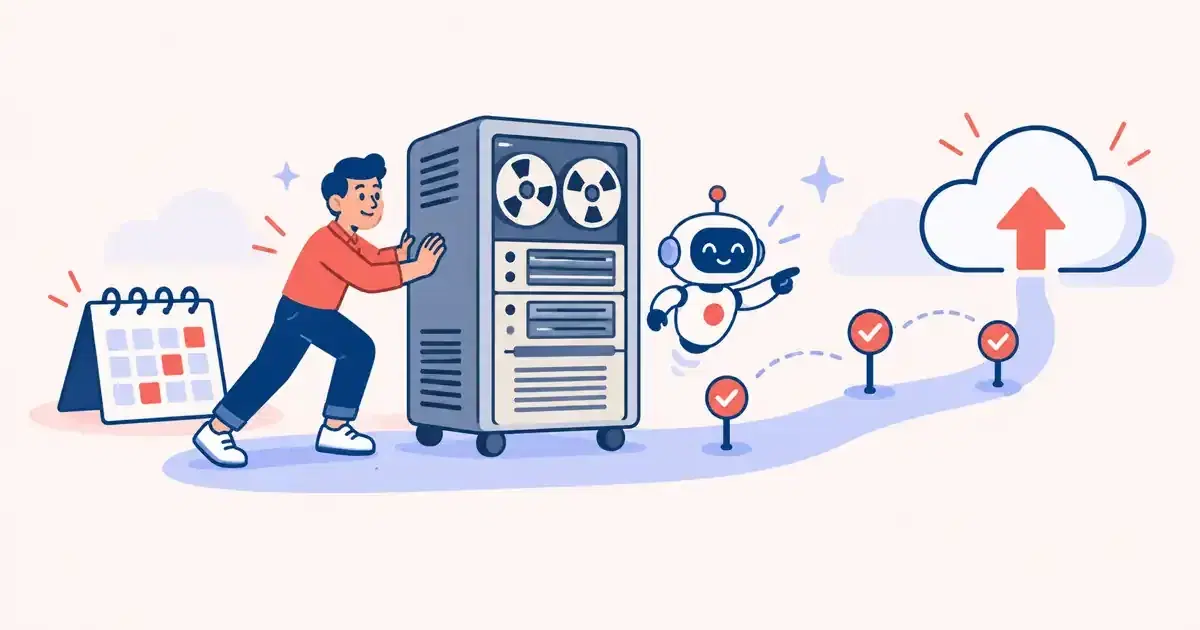
AI shortens the understanding part of a legacy modernization substantially (Thoughtworks measured two thirds on one project), and leaves most of the delivery part close to where it was. For a single business-critical application, plan on months, not weeks: a few months for a lift-and-shift or light refactor, and roughly 6 to 12 months for a rewrite with real data migration and a parallel-run period (our planning estimate). Vendor claims of "years to months" describe the best case on well-bounded code, not a typical estate.
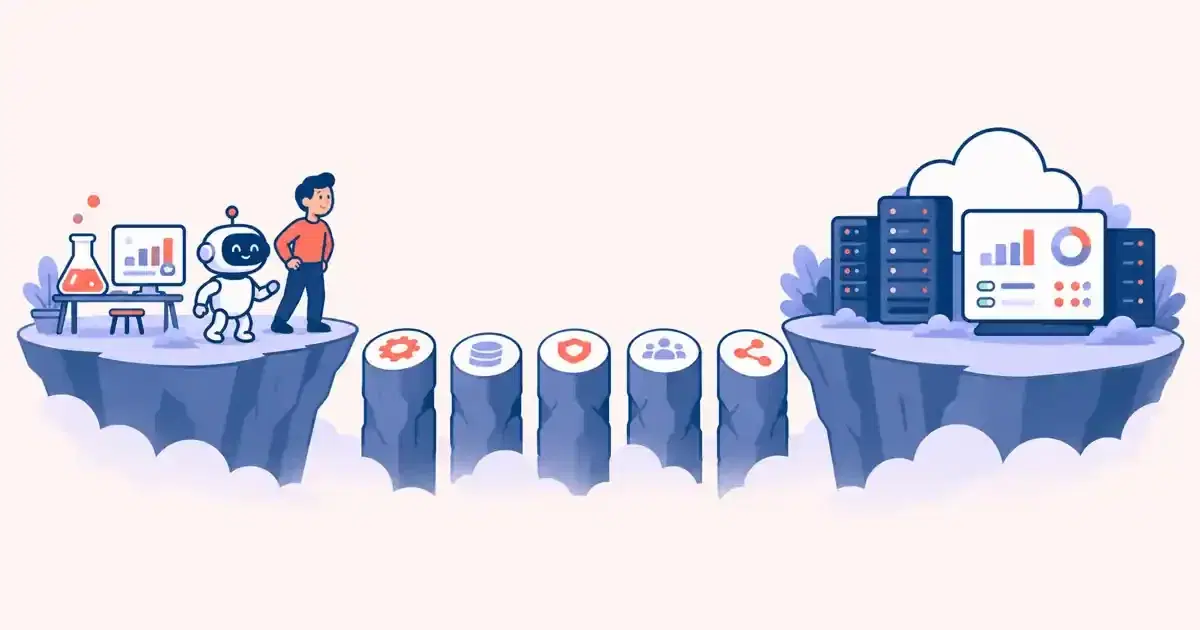
Why? Modernization splits into two halves. One is figuring out what the old system does, and AI handles that well. The other covers moving data, testing behaviour, running old and new in parallel, and cutting over. People, sign-offs and risk set the pace there, so AI only helps around the edges.
Key Takeaways
- McKinsey reports 40 to 50 percent faster modernization timelines with generative AI (December 2024), the only whole-programme figure among the sources below.
- Thoughtworks cut reverse-engineering time by two thirds on one 15-million-line European automotive programme that was nine months behind schedule.
- Anthropic says teams can modernize COBOL "in quarters instead of years"; AWS says "years to months." Neither publishes a multiplier you can plan against.
- Gartner predicts more than 70% of mainframe exit projects started in 2026 will fail to deliver intended benefits because GenAI capability is overestimated.
- Cognizant found most senior leaders give themselves about two years for their modernization goals, and expects most to struggle to hit that.
- Code generation is the small piece. Data migration, dual running and cutover are where the calendar goes, per Thoughtworks.
Each figure above is sourced in the sections below. Our own planning ranges are labelled as estimates.
What the Evidence Actually Says About Speed
Four sources dominate the discussion. Each measures something different, so averaging them would mislead.
| Source | Claim | What it measures |
|---|---|---|
| McKinsey (2 December 2024) | 40 to 50 percent acceleration in tech modernization timelines | End-to-end programme timeline |
| Thoughtworks (15 August 2024) | Reverse-engineering time cut by two thirds | One phase, on one 15-million-line codebase |
| Anthropic (23 February 2026) | COBOL modernization "in quarters instead of years" | Whole COBOL modernization, qualitative |
| AWS (1 December 2025) | "Cutting modernization timelines from years to months" | Mainframe modernization, qualitative, no multiplier given |
Look at the last column. McKinsey alone gives a number for the whole programme, and that number is 40 to 50 percent, not 90. The two-thirds figure is a single phase. The "years to months" language is marketing shorthand, and both vendors stop short of giving a multiplier.
That is consistent with the sceptical evidence. In June 2026 Gartner published a prediction that more than 70% of mainframe exit projects started in 2026 will fail to produce the intended benefits because GenAI tooling is overestimated. IBM's Rob Thomas made a related point when Anthropic's COBOL post came out, telling IT Pro that translation "captures almost none of the actual complexity." IBM sells mainframes, so weigh that accordingly, but the underlying point about performance tuning and integration is a fair one.
Where AI Saves Time
Three activities shrink the most.
Discovery. Reading a million lines of undocumented code and producing a dependency map is slow for people and fast for a model. Anthropic's playbook describes this as "automated exploration and discovery" followed by "risk analysis and opportunity mapping." This is the phase where the Thoughtworks two-thirds saving was measured.
Documentation and requirements extraction. Business analysts get readable descriptions of what a module does, which frees the few people who remember the system for architecture decisions rather than explanations.
Code translation and boilerplate. Converting a well-structured module to a modern language is now cheap. Thoughtworks describes code generation as "a small piece of the problem here, but one that is becoming cheaper and faster with AI tools."
All three are real gains, and all three land at the start of the project. Quicker discovery also improves the plan and, in our view, makes the estimate more honest, which is worth as much as the days saved.
Where the Months Still Go
The finish date is decided by the parts AI leaves alone.
Planning under business constraints. Thoughtworks notes that modernization priorities "are often shaped by factors that aren't formally documented or readily available to AIs." Which module can go first depends on who owns it, what the auditors need and which quarter-end you cannot touch.
Data migration and synchronisation. Moving decades of records, reconciling them and keeping both systems in step is slow, careful work. If the target is a cloud platform, cloud application development decisions about data stores belong in this phase, not after it.
Dual running and cutover. Thoughtworks lists "potentially dual run for a period of time, and ultimately cut over" as part of forward engineering. A parallel run is measured in business cycles, such as a full month-end close, not in engineering days.
Testing behaviour you cannot see. Old systems encode rules nobody wrote down. Proving the new system matches takes test design, and in our view AI-generated tests can only confirm what the model understood.
Cognizant's October 2025 research adds the organisational angle: most senior leaders give themselves two years for modernization, yet the analysis suggests most will struggle to meet that schedule because of tech debt and resource constraints.
A Realistic Timeline by Approach
The figures below are planning ranges from our reasoning about how the phases stack up, not measured benchmarks. Treat them as a starting hypothesis to test against a proper assessment.
| Approach | What happens | Planning range with AI assistance |
|---|---|---|
| Rehost | Move unchanged code to cheaper infrastructure | Weeks to a few months |
| Refactor | Restructure code, keep behaviour | A few months |
| Rewrite | Translate or rebuild in a modern stack with data migration | Roughly 6 to 12 months for one core application |
| Replace | Swap for a commercial product | Driven by vendor onboarding and data mapping, not by code |
Anthropic's post uses the same four approaches: rehosting, refactoring, rewriting and replacing. Choose the approach before anything else, because it shifts the timeline more than the tooling does.
How to Plan a Timeline You Can Defend
- Split the estimate into the two halves. Give discovery an AI-compressed number and delivery a conventional one. Add them.
- Modernize incrementally. Anthropic's own description ends with "incremental implementation with continuous validation": one component at a time, each validated before the next. Small releases surface surprises early.
- Put the parallel run on the calendar on day one. It is the item most often forgotten and hardest to shorten. For related sequencing, see our guide to integrating existing systems with new software.
- Keep a human owner for every module. Someone must be able to say the new behaviour is correct. AI can propose, but it cannot sign off.
- Pilot before you commit. Run AI-assisted discovery on one representative module and measure the saving on your code, then extrapolate. A dedicated team can run that pilot without pulling your own engineers off the roadmap.
The Bottom Line
The front of the modernization timeline has changed. A large legacy codebase can be understood faster, and the plan built on it is better. McKinsey puts the whole-programme saving at 40 to 50 percent, and the dramatic "years to months" claims come from vendors who do not publish a multiplier.
The back half, meaning data, testing, parallel running and cutover, still runs at the speed of people and risk. Gartner's prediction that more than 70% of mainframe exit projects started in 2026 will miss their intended benefits points at exactly that gap.
Plan discovery with AI numbers, delivery with conventional ones, and pilot on one module before you promise a date to your board. If you want a second opinion on sequencing or a scoped pilot for your own system, get in touch. We are glad to say when the honest answer is longer than the vendor deck suggests.