How to Integrate AI Features into Your Existing Software
Are you planning to boost your business using AI? Discover how integrating AI can improve customer interactions. Learn about different types of AI, identify the right use case, and follow the steps to add AI to your existing software effectively.
By Tart Labs·Published
Want to start a Project?
share
share
Introduction
Do you want more repeat customers for your e-commerce business? Need to manage stocks and increase income in your retail business? Then, integrating Artificial Intelligence(AI) into your existing software is the best solution, as it performs as the backbone of many successful businesses.
Integrating artificial intelligence into software has now become the best business decision, which makes companies grow and improve in every area. Starting from choosing the right projects to implementing innovative solutions, AI supports each step in a smart and efficient way. Choosing the right Artificial Intelligence development company makes this process more effective.
So, how do you integrate that perfect AI solution for your business? Explore this guide and understand why AI integration is important, the types of AI technologies, steps to integrate it, and how AI benefits different industries.
Why Should You Integrate AI into Your Business?
Do you know Amazon reported a 10-13% increase in annual revenue growth after implementing AI, as it offers personalized shopping experiences to its customers. Netflix also increased its revenue by around 20-30% through AI-powered content recommendations, which help the company save nearly $1 billion each year.
Retail companies such as Walmart achieved 15% boost in online conversion rates during major sales events by using AI-driven chatbots. AI supports customer service, better price planning, and inventory management, helping retailers to improve sales performance.
Generative AI can automate daily tasks, provide 24/7 customer support, analyze business data and give better business suggestions. With strong security features, it can identify risks early and protect your data. Thus, these AI helps businesses grow faster and reach new levels of success beyond their expectations.
Types of AI Technologies Used in Software Integration
AI can be classified into different types based on its intelligence level, the purpose it serves in real-world applications, and how it improves the user experience. Explore these AI technologies and choose the best type of AI that fits your business needs.
Cloud-Based AI Integration
Instead of installing the whole software on your own computer, make the AI run on the cloud. You can choose the cloud AI services that run on internet, such as machine learning models, NLP tools, or predictive analytics, based on your business requirements.
Cloud app development companies provide APIs that connect directly with your existing software applications. These APIs send data to the cloud, where AI processes it and returns results in real time.
Frequently Asked Questions (FAQ)
AI integration means adding artificial intelligence capabilities to your existing software to automate tasks, analyze data, and improve decision-making. For example, AI chatbots, predictive analytics, and smart recommendation systems that support business growth and operations.
Let's connect and create something amazing together!
Got an idea or project in mind? Whether it's custom software, a dedicated dev team, or help with digital transformation, we're here for it. Reach out—we'll bring your vision to life.
Contact us
Prefer to speak directly? You’ll find our address, email, and contact details right here.
Office Location
Block A1 Third Floor, Rathinam TechZone, SEZ Campus Pollachi Main Road, Eachanari, Coimbatore, Tamil Nadu 641021, India
Thinking through a new idea or stuck with a challenge? Drop us a message—we'll listen, brainstorm, and help move things forward.
Advantages of Cloud-Based AI Integration
Cost-effective integration as a business should pay only for AI services.
Integration takes less time.
High protection for sensitive data using reliable safety measures.
Access software from anywhere.
Handles complex AI tasks efficiently.
Conversational AI
Do you want your software to make conversations with humans? Then implement conversational AI into your business. It understands what users say through text or voice, processes the meaning, and answers it correctly.
Conversational AI not just replies like a normal chatbot, but it also learns from past interactions and improves response time. Handles difficult queries without human intervention.
Advantages of Conversational AI
Provides round-the-clock support and answers queries instantly.
No need for a large customer support team, as it handles customer interactions for large enterprises.
Communicate with customers in different languages.
Easy integration into websites, mobile apps, and other messaging platforms.
Hiring and training costs are reduced for support staff.
An advanced technology of AI that can plan, decide, work, and act without human involvement. It observes the data, plans it, and takes actions automatically.
For example, self-driving cars use autonomous AI to detect the roads, traffic signals, and other vehicles, which helps them to decide when to brake, turn, and drive safely without human control. Also, AI-powered trading systems analyze market trends, automatically buy or sell stocks, and adjust strategies in real time.
Advantages of Autonomous AI
Operates independently, reducing the need for human resources.
Automates complex processes and reduces manual effort.
Manages high volumes of data and tasks efficiently.
Reduces labour costs and operational expenses through automation.
24/7 availability is guaranteed without downtime.
Predictive Analytics
Predictive Analytics AI uses past and current data to predict the future. It analyzes historical data, user behaviours, and patterns to provide smarter decisions for your business.
Best e-commerce application development company uses predictive analytics to identify which products customers like to buy next. Banks analyze past transaction history to find suspicious activities. In the manufacturing industry, predictive analytics monitors machines continuously and detects issues.
Advantages of Predictive Analytics
Business risks get reduced as it detects issues early.
Boost sales by identifying sales opportunities and improving conversion rates.
Detects machine issues early and solves them.
Saves time and cost for your business as it lowers operational expenses.
Optimize inventory by maintaining the right stocks and reducing wastage.
Embedded AI Integration
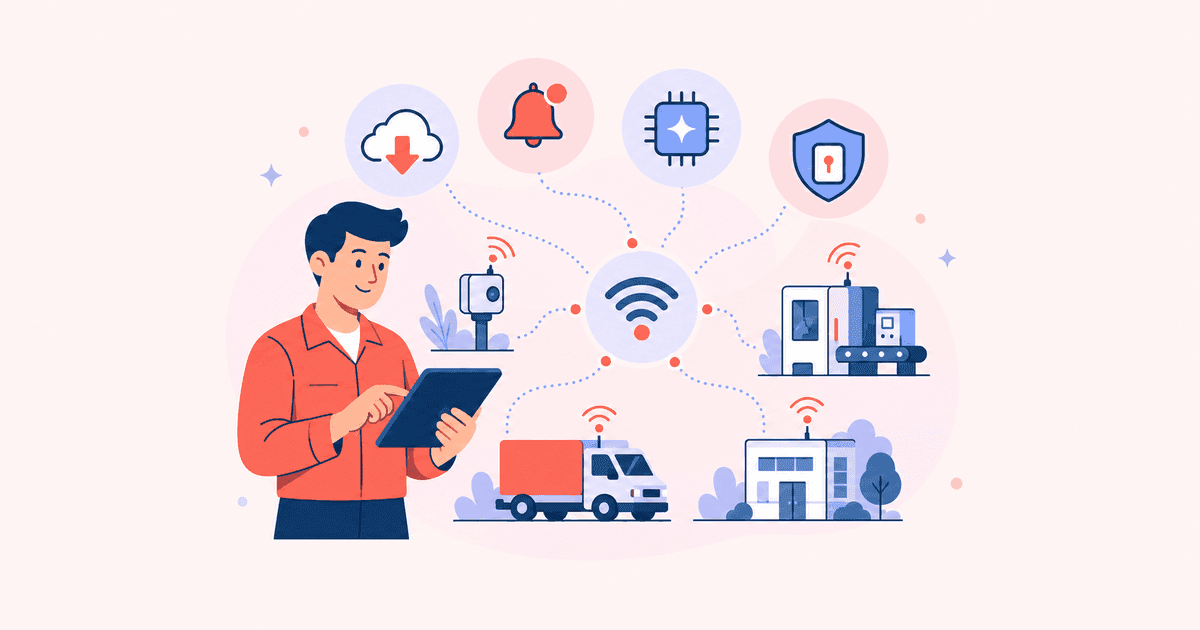
Do you want to integrate AI directly into your software and use it without an internet connection? Then implement Embedded AI into your device. No need to depend on the cloud as the AI runs within the system and makes decisions.
Smart cameras with face recognition use embedded AI to detect and identify people. Thermostats, a sensor, that learn temperature preferences and adjust their settings automatically by saving energy and improving comfort.
Advantages of Embedded AI Integration
No need for network delay issues, as it supports an offline environment.
Operational expenses are reduced by transferring all data to the device itself.
Devices can analyze data 24/7 without interruption.
AI models can be tailored for specific device functions and use cases.
AI-Driven Automation
AI-driven automation refers to artificial intelligence that performs tasks intelligently instead of following fixed rules. It collects data from users, machines, and sensors without any need for human knowledge. Additionally, it learn from results to improve continuously.
Ever noticed how e-commerce platforms suggest products based on your searches and purchases? AI-driven automation is behind them. It also monitors patient data in healthcare and gives alerts whenever a health condition is at risk. In recruitment, AI scans resumes and shortlists candidates.
Advantages of AI-Driven Automation
Analyze trends and provide valuable information to your business.
Automated responses and personalized recommendations improve customer satisfaction.
Lowers human effort as it automates repetitive tasks.
Benefits of AI in Different Industries
Artificial Intelligence for web applications adapts to industry needs, improves its efficiency and accuracy over time. Let’s explore how AI benefits different industry operations and transforms the way businesses work.
Healthcare
Early Disease Detection:
AI software development analyzes X-rays and MRIs to identify early signs of cancer, whereas the human eye finds it difficult to detect them. It monitors patient data continuously and warns when health risks arise. AI helps predict genetic disorders by studying DNA patterns and family medical history.
Personalized Treatment Plans:
Doctors provide unique health plans to each patient. With the help of custom AI software development, patients receive more accurate treatment, faster recovery, and reduced side effects because care is tailored to their needs.
Remote Patient Care:
AI helps doctors provide medical support online and reduces visits to hospitals or clinics. By using telemedicine software development, healthcare providers offer virtual consultations, share digital prescriptions, and track patient health in real time.
Smart EHR/EMR Management:
Patient records are stored through EHR/EMR software development. It helps healthcare providers organize medical histories, lab reports, prescriptions, and treatment notes in one secure system.
Chatbots and virtual assistants manage customer support requests for your business and provide answers instantly. Thus, the workload for the support team gets reduced, and users get meaningful financial advice for their investment plan.
Suspicious activities are easily detected by artificial intelligence by analyzing transaction patterns. These AI systems can block the hacked customer IDs and inform them automatically.
Personalized Banking Services:
Based on the income patterns, AI helps customers by offering personlized banking services. It helps them make a profit each month and save money, and helps build stronger relationships with banks.
Retail app development company can analyze sales history, customer behaviour, and suggest the right product at the right time.
Personalized Product Recommendations:
Artificial Intelligence in retail and e-commerce helps businesses boost sales and grow revenue. It also improves customer satisfaction and builds stronger engagement with the software.
Visual Search and Image Recognition:
Customers can search for a particular product using an image instead of writing search words. This image recognition technology identifies the shapes and patterns of the product and suggests similar items quickly.
AI uses cameras and sensors to detect issues and ensure the best quality for all products. AI-powered vision systems check car part alignment and assembly accuracy.
Smart Factory Automation:
Artificial intelligence software development allows factories to automate machines and reduce human effort. AI-controlled robots handle complex tasks and help manufacturers increase productivity.
Workplace Safety Monitoring:
Worker safety improves in a way that AI monitors factory environments and employee movements in real time. It checks whether workers wear helmets and gloves for safety and predicts hazardous conditions to prevent injuries.
Education
Personalized Learning Experiences:
AI creates personalized learning paths by understanding each student's skill level. Practice exercises and videos are recommended based on students previous test results.
Remote Learning and Virtual Classrooms:
By using e-learning apps, students can connect with instructors through virtual mode. Online education platforms use AI to conduct live classes and monitor students participation.
Smart Content Creation:
AI helps educators create learning content faster based on the syllabus. It saves time for teachers, and students can get the updated and personalized learning resources.
AI in logistics software development provides accurate location details and predicts delivery times. This helps businesses manage deliveries better and build trust with customers.
Warehouse Automation:
Artificial intelligence for businesses analyzes data and product demand in real-time. It manages warehouse operations such as sorting and packing. Thus, minimizes human errors and reduces manual work by handling all tasks in real-time.
Route Optimization and Smart Navigation:
Choose the best delivery routes by implementing AI in your software. It analyzes weather conditions and traffic data. AI-powered navigation systems provide alternate routes in real time.
Creators can edit video and audio quickly by automating tasks such as cutting scenes, adding effects, and color correction. With the help of artificial intelligence in media, you can also remove background noise and improve scenes effectively.
Virtual Production and Animation Assistance:
AI automates tasks like scene rendering, adding special effects and voiceovers, which reduces the overall production time and budget. It can create virtual sets based on films and animate entire movie scenes in real time.
Fraud Detection and Copyright Protection:
AI protects copyrighted content and detects fraud. It continuously monitors online platforms and identifies any illegal use or spam content, guaranteeing security and compliance.
Information technology
AI-Powered Cybersecurity:
It detects cyberattacks, malware, and suspicious network activity automatically. AI identifies unusual behaviour, monitors networks, and helps security teams to focus on important tasks.
Intelligent IT Infrastructure Management:
Do you want to manage your IT systems better? Then integrate AI into your business software. It monitors data centers and company computers, automatically balances workloads and reduces downtime and overall costs.
Automated Helpdesk and IT Support:
AI in information technology resolve employee IT issues, such as software installation errors or network connectivity problems. It provides support faster and reduces response time.
How to Choose the Right AI Use Case for Your Business?
Which processes in your business are repetitive, prone to human error, or too complex to manage? Start by analyzing these areas carefully. AI works best where large amounts of data are generated.
Make sure your data is accurate and of good quality, and check if your system is ready for AI integration. Initially, test AI with a pilot project, see how it performs, and then expand step by step.
Are you choosing the right areas for AI in your business? Focus on the most valuable use cases and make sure your AI efforts succeed and bring real results. Artificial intelligence in software will add real value, improve efficiency, and maximize benefits for your company.
Steps to Integrate AI into Existing Software
Implementing AI into your business software is a long process, but it is achievable and provides long-term growth for your organization. Let’s explore the steps that actually help integrate artificial intelligence into your current software.
Identify the Key Problem to Solve with AI
What specific challenge in your business needs improvement? Just focus on areas where processes are slow or error-prone. Whether you need to
Improve customer support responses
Detect fraud
Predicts demands
Automate repetitive tasks
Optimize supply chain operations
Develop a Clear AI Strategy
Create a step-by-step plan that covers objectives, technologies, data sources, workflow changes, and monitoring methods. Assign a project team to oversee the process and keep everyone aligned.
Collect and Organize the Data
Collect all necessary data from customer interactions, sales records, and business reports. Remove the outdated one and the necessary data alone. When data is organized well, AI works more accurately and avoids mistakes during integration. Clean and reliable data forms the base for a successful AI setup.
Prepare Your Data and Choose the Right Storage
Assign the proper data and label it to guarantee accessibility. Some options for the right data storage include:
Data lakes – store large, raw datasets cost-effectively
Data warehouses – analyze, organize, and create meaningful reports
Hybrid cloud setups – combine cloud and on-site storage for flexibility
Select based on cost, speed, scalability, and integration with AI tools.
Ensure Legal and Ethical Compliance
Is your AI safe? Conduct checks to prevent bias, protect data privacy, and explain AI decisions. By following legal and ethical standards, you can build trust with your clients.
Select the Right AI Technology
Decide whether a simple model or an advanced network fits your business needs. For example, choose
Machine Learning (ML) – analyze large datasets
Natural Language Processing (NLP) – understand text and language
Computer Vision – analyze images and videos
Voice Recognition – support conversational AI
Generative AI - creates content and interact in live with users
Start Integration
Begin with pilot tests on small datasets, integrate AI and monitor performance closely, and make adjustments based on results. Gradual deployment reduces risk and helps teams adapt smoothly.
Conclusion
Currently, businesses that use AI in their software lead the market. Because AI uses its advanced technologies to reduce work, stay intelligent, and gain new customers. Hire dedicated developers to bring AI innovations to your software is also a smart approach.
Are you thinking of introducing AI to your software? Contact us today, and we will help you grow your business by integrating AI. Our team helps you choose the right AI solutions, integrate them smoothly, and create software that delivers real value and long-term growth.