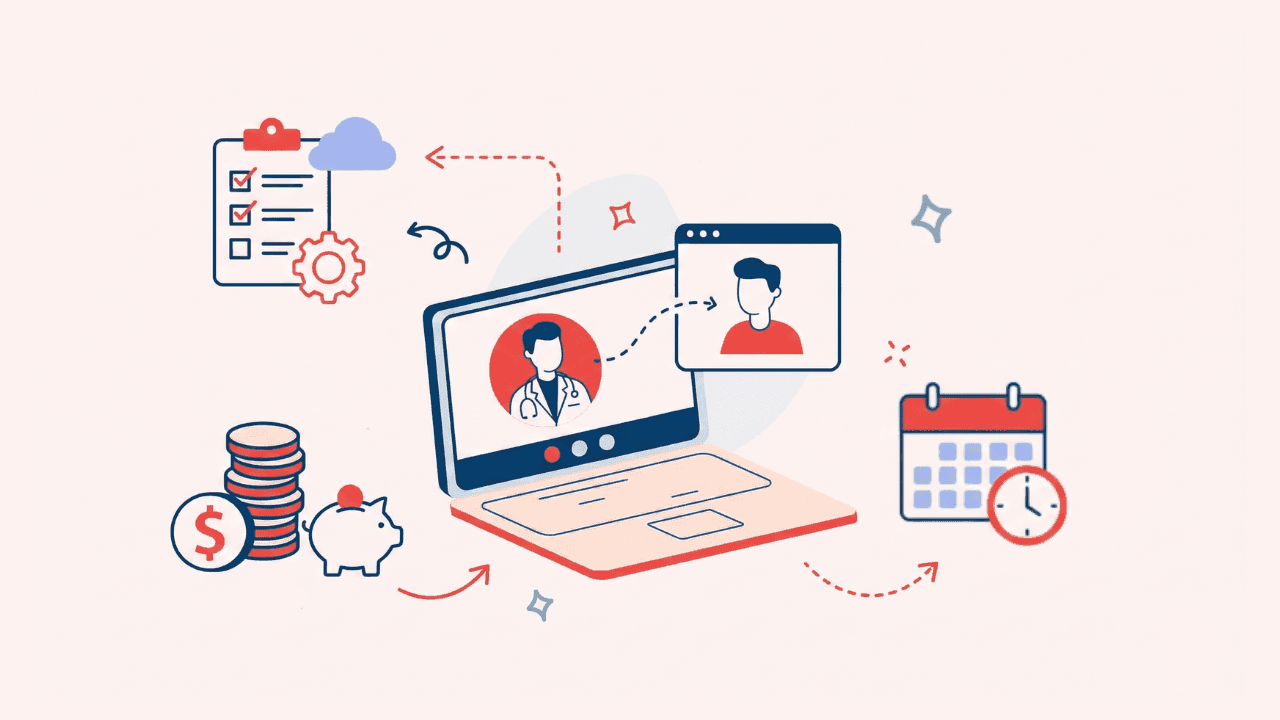
Planning for telemedicine app development but confused about the requirements, cost, and timelines? Explore this complete guide to start your healthcare platform with clarity.
By Tart Labs·Published
Want to start a Project?
share
share
Introduction
People today prefer to do everything online because it saves time and makes life easier. So what about healthcare? Patients want quick and convenient digital health services that save their time and keep them away from crowded hospitals. With telemedicine software development, virtual healthcare becomes easy and comfortable for everyone.
A telemedicine platform allows doctors and patients to connect through a single, secure system. Just a mobile or laptop is enough to cure your body; you can book appointments, join video consultations, share medical reports, and get follow-up care. Improve workflows, reduce paperwork, and help doctors reach more patients.
From remote consultations and real-time communication to faster recovery and cost-effective healthcare delivery, everything can be managed through telemedicine software. As healthcare becomes accessible anytime, anywhere, many businesses are now looking for the right telemedicine software development company to build custom telemedicine software with the best features, smart technology, and strong data security.
In this blog, we will explore what a telemedicine platform is, the key requirements to build one, the development cost, and the timeline you need to know before starting your telemedicine software development journey.
What is a Telemedicine Platform and Why is it important?
A digital tool that allows patients and doctors to connect online for medical care. Instead of visiting a clinic in person, patients can use telemedicine software to book appointments, join video consultations, share medical records, and receive e-prescriptions from anywhere. It works as a complete virtual healthcare system that makes healthcare simple.
With an online doctor consultation app, patients receive timely care. Doctors also reach more people without delays. Worrying about data and video screens? With secure data handling, we provide better care with less effort. That’s why many hospitals and clinics partner with a trusted telemedicine software development company to build reliable, user-friendly, and scalable solutions.
Types of Telemedicine Software
Explore the different types of telemedicine software designed to support specific needs in digital healthcare. This will help you clearly understand which type of telemedicine application development is the right fit for your idea and matches your healthcare goals.
On-Demand Video Consultation Software
Patients connect with doctors through secure video calls whenever they need medical help. It removes the need for physical visits, making healthcare easier to access whenever they need it.
Some unique features include:
– Patients can connect with doctors anytime they need help.
Frequently Asked Questions (FAQ)
Telemedicine software allows doctors and patients to connect online through video calls, chats, and digital health tools. It helps people get medical care from home without visiting a clinic. Supports features like e-prescriptions, medical records, and remote health monitoring for better and faster care.
Let's connect and create something amazing together!
Got an idea or project in mind? Whether it's custom software, a dedicated dev team, or help with digital transformation, we're here for it. Reach out—we'll bring your vision to life.
Contact us
Prefer to speak directly? You’ll find our address, email, and contact details right here.
Office Location
Block A1 Third Floor, Rathinam TechZone, SEZ Campus Pollachi Main Road, Eachanari, Coimbatore, Tamil Nadu 641021, India
Thinking through a new idea or stuck with a challenge? Drop us a message—we'll listen, brainstorm, and help move things forward.
Instant virtual care
Easy appointment booking – Set up your doctor visit in seconds with a simple tap on your screen.
Secure communication – Video calls and patient data are fully protected.
Digital prescriptions – Doctors can send prescriptions directly through the app.
Time-saving for doctors and patients – Reduces long waits and streamlines care.
Store and Forward Telemedicine
Want to share medical information such as reports, lab results, images, and X-rays with doctors without needing a live consultation? Then, store-and-forward telemedicine is the right option.
Patients can upload their medical details to a secure platform, and doctors can review them whenever they are free. It is useful for non-urgent cases or when doctors and patients are in different time zones.
RPM telemedicine software allows doctors to track a patient’s health in real time, even when they’re at home. With the help of IoT-enabled smart devices such as wearables, sensors, glucose monitors, and heart rate trackers, the data is shared directly with the doctor through a secure telemedicine system.
Here’s how RPM software helps:
Sends real-time health readings to doctors
Alerts doctors if something unusual happens
Prevent emergencies through early detection
Reduces hospital visits and saves time for patients
Improves overall patient care with continuous monitoring
Telepharmacy
Without visiting a pharmacy in person, telepharmacy allows patients to receive the medicine online. Pharmacists can review prescriptions, guide patients on how to take their medicines, and provide quick support through chat or video calls.
Patients can upload their medical reports, receive e-prescriptions, and get their medicines delivered to their doorstep.
Telepharmacy helps by:
Safe and quick access to medicines
Professional guidance through online consultations
Reduces long wait times at physical pharmacies
Guarantees accurate prescription management
Supports patients with regular medication follow-ups
Teletherapy
Teletherapy makes mental health counselling accessible from anywhere by allowing patients to connect with licensed therapists online. People can receive supportive care that makes them feel relaxed.
Here’s how teletherapy helps:
Offers private and comfortable therapy sessions
Makes mental health support available anytime, anywhere
Reduces the need for in-person visits
Helps therapists reach more patients with ease
Mobile Telemedicine Apps
Patients can access your virtual healthcare software directly from their smartphones. Users can book appointments, get consultations from doctors, receive e-prescriptions, upload reports, and track their health from anywhere.
Quick appointment booking and virtual consultations
Secure chat and medical record sharing
Instant alerts for prescriptions and follow-up reminders
Smooth experience for both patients and doctors
Nowadays, healthcare businesses partner with a top mobile app development company to build reliable, secure, and scalable mobile telemedicine applications that meet their needs.
Key Requirements of Telemedicine Software Development
Building a telemedicine platform requires careful planning to ensure it is safe, reliable, and easy to use for both doctors and patients. Let’s look at the key requirements every telemedicine platform must have:
High-Quality Video and Audio Consultations
One of the main features that every telehealth software development should have is to support clear video and audio calls. Good call quality helps doctors understand symptoms, offer accurate advice, and create a real clinic-like experience from home.
Secure Login and Authentication
Strong authentication, such as OTP, email verification, or multi-factor login, helps protect patient data and prevent unauthorized access.
Appointment Scheduling and Calendar System
A built-in scheduler allows patients to easily book appointments and helps doctors keep track of their available time.
Search Filters
With search filters, patients can quickly search for doctors based on their speciality, experience, location, language, or consultation fee.
Secure Payment Gateway
The platform should support safe and fast payment options, allowing patients to pay for consultations without hassle.
ePrescription and Digital Reports
Doctors must be able to send prescriptions, lab requests, and reports directly through the platform, making the treatment process quicker.
Real-Time Alerts and Notifications
Patients and doctors should receive instant reminders for appointments, medication, follow-ups, or new updates.
Features That Make Your Telemedicine Platform Stand Out
As we know, registration, search filters, notifications, and payments are the essential features when developing a telemedicine software. Let’s explore some core features that really make an impact and boost your business.
With the right features, users can benefit from a better digital healthcare experience.
HIPAA-Compliant Telemedicine Software
Guarantees patient data is safe at every step. Protects medical records, consultation details, and personal information through strict security rules.
With HIPAA-compliant telemedicine software, we integrate strong passwords, two-factor authentication, and biometric verification to allow access only to authorized users. Staffs who handles the telemedicine software are well-trained on HIPAA rules.
With the right AI app development company, your telemedicine software becomes smarter and more efficient. It handles everyday tasks, like sending appointment alerts, follow-ups, and health notifications.
Personalized treatment suggestions and the prediction of potential health risks improve patient engagement. More than just saving time, it guarantees that patients receive accurate care.
AI-powered telemedicine chatbots help with symptom checks, guide users through the software, provide mental health support, and continuously monitor patients.
Monitor a patient's health data continuously using smart wearables, sensors, and heart-rate trackers. These sensors monitor, collect, and transmit patient health data.
Reduces unnecessary hospital visits, as their health data is continuously monitored remotely. Doctors receive real-time updates, alerts, and detailed reports, making treatment more accurate and personalized.
Without any need to schedule a call, patients and doctors can communicate quickly through real-time chat. Users can ask simple health questions, doubts, and receive support for pre-consultation.
Some benefits include:
Reduced workload for doctors: Simple questions can be handled through chat instead of full consultations.
Convenient for patients: They can message anytime from home, work, or while travelling.
Secure message history: All chats are stored safely for future reference and treatment tracking.
Faster issue resolution: Small health concerns can be addressed immediately, preventing delays in care.
EHR/EMR Integration
Do you want powerful telemedicine software that connects smoothly with Electronic Health Records (EHR) and Electronic Medical Records (EMR)? With this integration, your platform becomes smarter, faster, and easier to use.
Doctors get quick access to a patient’s medical records, test results, past treatments, and medications, all in one secure place. More accurate consultations help patients get better care without delays.
Benefits of EHR/EMR integration are:
Better decision-making: Doctors have complete patient information for accurate diagnosis and treatment.
Faster consultations: Quick access to medical history reduces delays and repetitive questions.
Improved accuracy: Digital records minimize errors compared to manual paperwork.
Enhanced care coordination: Multiple healthcare providers can collaborate easily with up-to-date records.
Telemedicine Software Development Cost
In most cases, the cost of developing a telemedicine software depends on the features that you are implementing. How complex the features are, the development cost increases.
Factors that influence cost:
Number of features — Adding AI chatbots, remote monitoring, or EHR integration increases the cost.
AI features, IoT wearable integration, analytics dashboard
$80,000 – $150,000+
Estimated Development Timeline
The telemedicine app development timeline for a custom software depends on the features you choose, the app’s overall complexity, and the technologies used for development.
A basic version can be built faster, while advanced telemedicine software solutions with AI, IoT, or HIPAA compliance require more time for secure and smooth development.
Type of Telemedicine Solution
Estimated Time
Basic Telemedicine App
2 - 3 months
Mid-Level Telemedicine Platform
3 - 6 months
Advanced Telemedicine System
6 - 12 months
Basic Telemedicine App:
Perfect for clinics, startups, or individual doctors who want a quick and cost-effective virtual healthcare software. It offers secure video consultations, a basic chat system, appointment booking, and e-prescriptions modules.
Mid-Level Telemedicine App:
Offers advanced features, health record access, secure video consultations, and messaging. It is suitable for hospitals or healthcare providers that need a reliable system to handle large user groups and multiple doctor roles.
Advanced Telemedicine System:
Enjoy premium care with every click using advanced telemedicine software solutions. With AI, machine learning, and smart automation, your platform can deliver faster, more accurate, and more personalized healthcare. IoT-powered health tracking, real-time alerts, and automated reminders make remote care simple and stress-free.
Benefits of Telemedicine for Patients and Healthcare Providers
People from rural areas to busy city residents benefit from modern telemedicine software development. This healthcare management software cuts down on long travel and reduces waiting time, so people get medical care quickly and with less stress.
Explore some benefits of virtual healthcare:
Comfort and Privacy
Here is the solution to long waiting hours for regular health checkups. With telemedicine software, patients can communicate with doctors from their comfort zone. Also, it gives patients a private place to share their health concerns and receive an e-prescription delivered right to their doorstep.
Saves Time and Money
Eliminate the need for unnecessary hospital visits by using telemedicine software development. Patients can reduce travel costs, cut down on waiting time, and make medical care more affordable.
For healthcare providers, it also lowers operational costs by reducing walk-ins and allowing them to manage more appointments efficiently.
Reduces infection spread
Avoid unnecessary exposure to the spread of viruses and other illnesses with virtual healthcare software. It is helpful for seniors, children, and people with weak immune systems. With safe online checkups, everyone stays healthier, and the risk of infection drops.
Easy Access to Speciality Doctors
Connect with specialist doctors without long travel. If someone needs advice from a cardiologist, dermatologist, or any other expert, they can get guidance through a quick online consultation.
Better Follow-Up and Care
Better follow-up is one of the biggest advantages of telemedicine. Patients can connect with their doctors quickly without long waits or travelling far. With a quick video call, doctors can easily update the patient’s treatment and guide them accordingly.
Conclusion
As technology continues to grow, telemedicine will play a bigger role in delivering better, smarter, and more accessible healthcare for everyone.
Searching for a trusted telemedicine app development company to create new healthcare software, or want to upgrade your existing system? We’re here to help. Contact us with your idea, and our team will turn it into a smart, user-friendly solution that fits your needs perfectly.
Most AI pilots stall before production. The five gaps behind it (data, evals, ownership, operations, workflow), sourced figures and a pre-pilot checklist.