Implementing Agentic AI Workflows in Enterprise Software
Are you looking for smarter ways to manage complex business processes? Learn how Agentic AI workflows use autonomous AI agents, intelligent workflow automation, and enterprise AI solutions to support business growth.
By Tart Labs·Published
Want to start a Project?
share
share
Introduction
Enterprise businesses handle thousands of tasks, customer requests and financial transactions every day. As operations grow, managing these activities becomes very difficult. While traditional workflow automation helps automate repetitive tasks, it struggles with decision-making, problem-solving, and adapting to changing situations.
To solve this problem, teams need systems that can understand context, analyze information, and take appropriate actions without requiring constant human supervision. This demand for intelligent automation has led organizations to explore new approaches to AI-powered business automation.
These challenges have led to the rise of Agentic AI, a new approach that goes beyond traditional automation. Instead of simply following predefined rules, Agentic AI can understand objectives, decide what needs to be done, and carry out tasks with limited human assistance. As adoption continues to grow, many organizations search for Enterprise Agentic AI development services to build solutions that align with their business goals.
In this blog, we'll explore what Agentic AI workflows are, how they differ from traditional automation approaches, the core architecture behind them, practical implementation strategies, real-world enterprise use cases, and the best practices organizations should follow when building and deploying Agentic AI solutions.
What are Agentic AI Workflows?
Agentic AI workflows in custom software are smart processes to complete specific tasks. Traditional AI systems rely on human guidance throughout the process, whereas Agentic AI workflows can assess situations, take appropriate actions, and adapt when needed.
A typical Agentic AI workflow starts with a goal. The AI agent first understands what needs to be done and then creates a plan to achieve it. It can collect information from databases, company systems, documents, or other data sources. The agent can also use tools, APIs, and business applications to perform actions and move the task forward. If something changes during the process, the agent can update its plan and continue working toward the goal.
By combining AI-powered business automation with intelligent decision-making, Agentic AI workflows help organizations improve efficiency, reduce manual work, and build more effective enterprise AI workflows.
The Evolution of Enterprise AI: From Bots to Autonomous Agents
In the early stages, businesses used rule-based chatbots and automation tools to handle simple tasks such as answering FAQs and routing support tickets. Later, AI assistants improved user interactions and helped employees find information more easily. The arrival of Large Language Models (LLMs) made AI even more powerful by enabling systems to understand context and work with large amounts of information.
Frequently Asked Questions (FAQ)
Traditional automation performs well when tasks follow a predefined sequence. If a situation changes, the workflow usually needs manual updates or intervention. Agentic AI workflows are more flexible. Rather than operating through fixed instructions, AI agents can understand goals, assess available information, and choose suitable actions as tasks progress. Such flexibility makes them useful for business processes that involve changing conditions and multiple decisions.
Let's connect and create something amazing together!
Got an idea or project in mind? Whether it's custom software, a dedicated dev team, or help with digital transformation, we're here for it. Reach out—we'll bring your vision to life.
Contact us
Prefer to speak directly? You’ll find our address, email, and contact details right here.
Office Location
Block A1 Third Floor, Rathinam TechZone, SEZ Campus Pollachi Main Road, Eachanari, Coimbatore, Tamil Nadu 641021, India
Thinking through a new idea or stuck with a challenge? Drop us a message—we'll listen, brainstorm, and help move things forward.
Today, autonomous Artificial Intelligence agents can go beyond answering questions. They can plan tasks and complete workflows on their own. Thus, organizations achieve goals faster and with less manual effort.
Reactive Bots Vs Generative AI Vs Agentic AI
Reactive Bots
Answers predefined questions using fixed rules
Generative AI
Creates content, summarizes information, and provides recommendations
Agentic AI
Gathers data, verifies documents, interacts with CRM systems, sends notifications, and completes onboarding with minimal human intervention
Feature
Reactive Bots
Generative AI
Agentic AI
Primary Function
Respond to predefined inputs
Generate content and insights
Achieve goals through autonomous actions
Operating Approach
Rule-based
Prompt-driven
Goal-driven
Context Awareness
Low
High
High and persistent
Reasoning Capability
None
Moderate
Advanced
Decision Making
No
Suggests decisions
Makes and executes decisions
Task Planning
Fixed workflows
Can recommend steps
Creates and manages multi-step plans
Action Execution
Limited
Minimal
Autonomous execution across systems
Adaptability
Low
Moderate
High; adapts to changing conditions
Tool & System Integration
Basic integrations
Selective tool use
Extensive use of APIs, databases, CRMs, ERPs, and enterprise systems
Enterprise Use Case
FAQs, ticket routing, support bots
AI copilots, content generation, document analysis
Customer onboarding, IT operations, finance automation, supply chain management
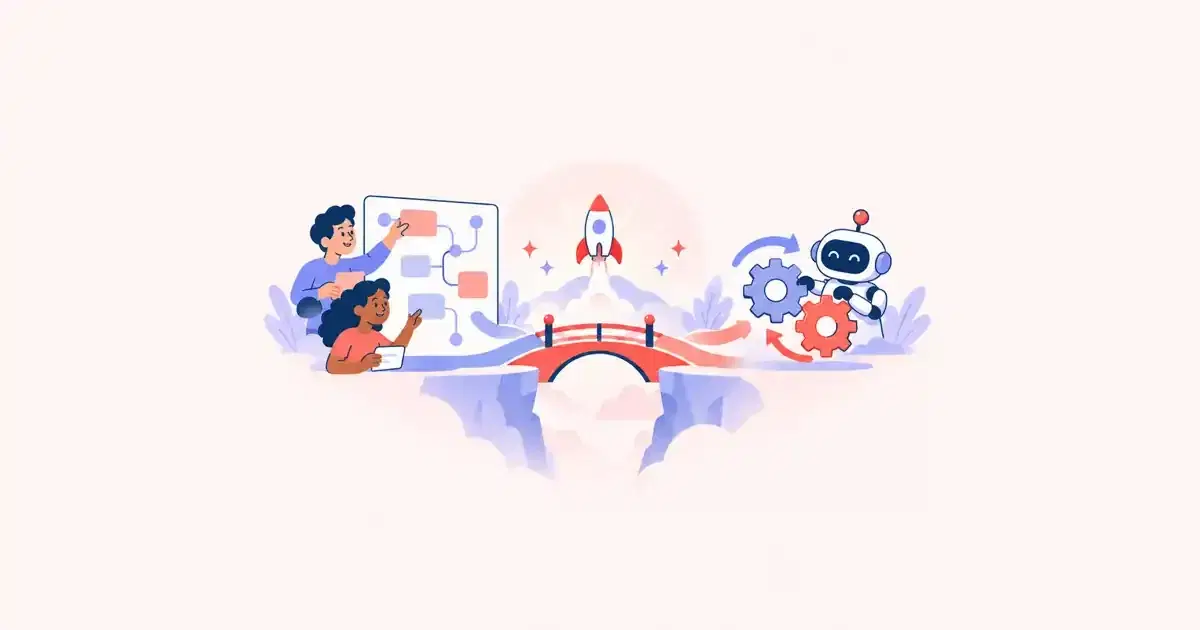
Organizations shift to Agentic AI workflows to work beyond traditional automation. AI agents in enterprise software make it easier for businesses to manage complex processes and daily operations. Let’s explore the benefits of Agentic AI.
Faster Operations and Reduced Costs
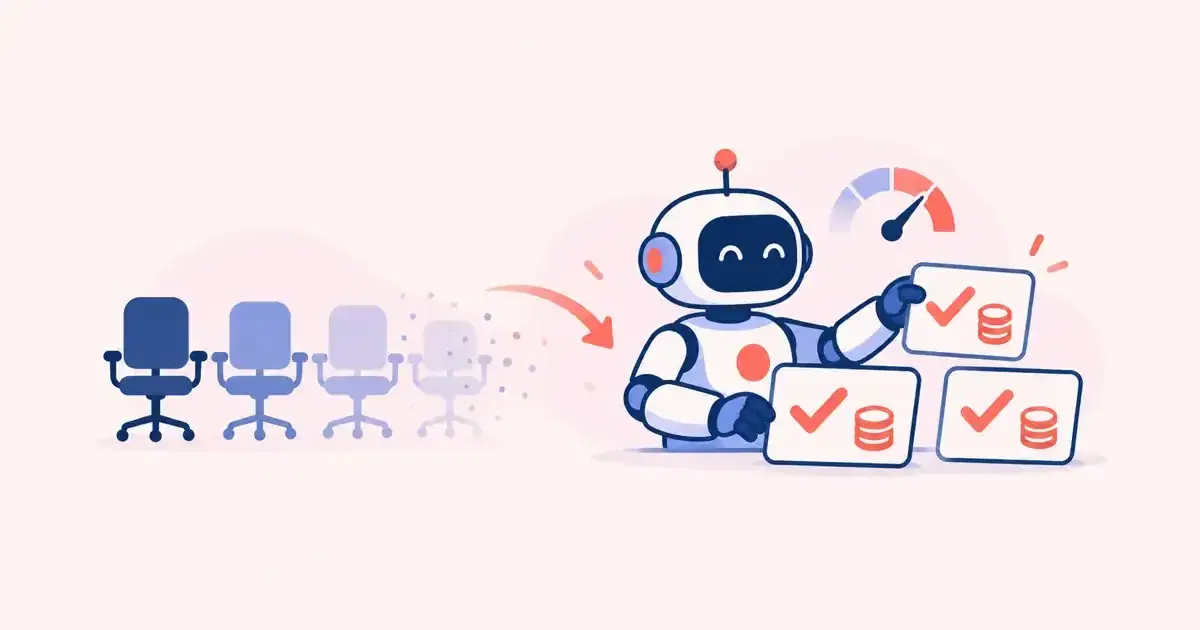
One of the biggest benefits of Agentic AI workflows is the ability to handle complete business processes with minimal human involvement. Instead of requiring people to move tasks from one step to another, AI agents can collect information, verify data, update systems, and trigger the next action automatically. Organizations can complete tasks faster, reduce delays, and lower operating costs.
Improved Accuracy and Fewer Mistakes
Manual processes can lead to mistakes, missed approvals, and compliance issues. Agentic AI workflows help reduce such problems by following processes consistently and monitoring activities in real time. AI agents can detect unusual patterns, identify potential risks, and alert teams before issues become bigger problems. Better data accuracy, stronger compliance, and more reliable operations are some of the key benefits.
Greater Scalability and Business Growth
As organizations grow, managing larger workloads becomes more challenging. Autonomous AI agents can handle increasing numbers of transactions, customer requests, and operational tasks without requiring a matching increase in staff. Multiple business systems can also be connected through enterprise AI workflows, helping teams stay productive and aligned. Greater scalability supports long-term business growth while improving customer experiences and overall efficiency.
How Agentic AI Workflows Operate
Autonomous AI agents understand goals and take actions to complete tasks. Let’s understand how Agentic AI workflows function.
Goal Setting and Task Planning
Every Agentic AI workflow starts with a goal. The goal could be resolving a customer issue, onboarding a new employee, or processing a business request. Once the goal is defined, the AI agent breaks it into smaller tasks and creates a plan to complete them. If new information becomes available, the plan can be updated to keep the workflow moving in the right direction.
Reasoning and Decision-Making
After creating a plan, the AI agent reviews available information. It can examine user requests, business rules, past records, and current data. Based on what it finds, the agent decides the best next step. When unexpected situations arise, it can adjust its actions or involve a human when necessary.
Tool Usage and External System Interactions
Agentic AI workflows can connect with enterprise systems, databases, APIs, and business applications. Instead of stopping at recommendations, AI agents can perform tasks directly. They can update records, send notifications, generate reports, schedule meetings, and move information between systems. Such capabilities help automate work across multiple business platforms.
Feedback Loops and Continuous Learning
Once actions are completed, the AI agent reviews the results. It checks whether the goal was achieved and identifies any issues that occurred during the process. Information gathered from previous tasks helps improve future decisions and actions. Over time, workflows become more efficient, which helps organizations improve accuracy.
Core Components of an Enterprise Agentic AI Architecture
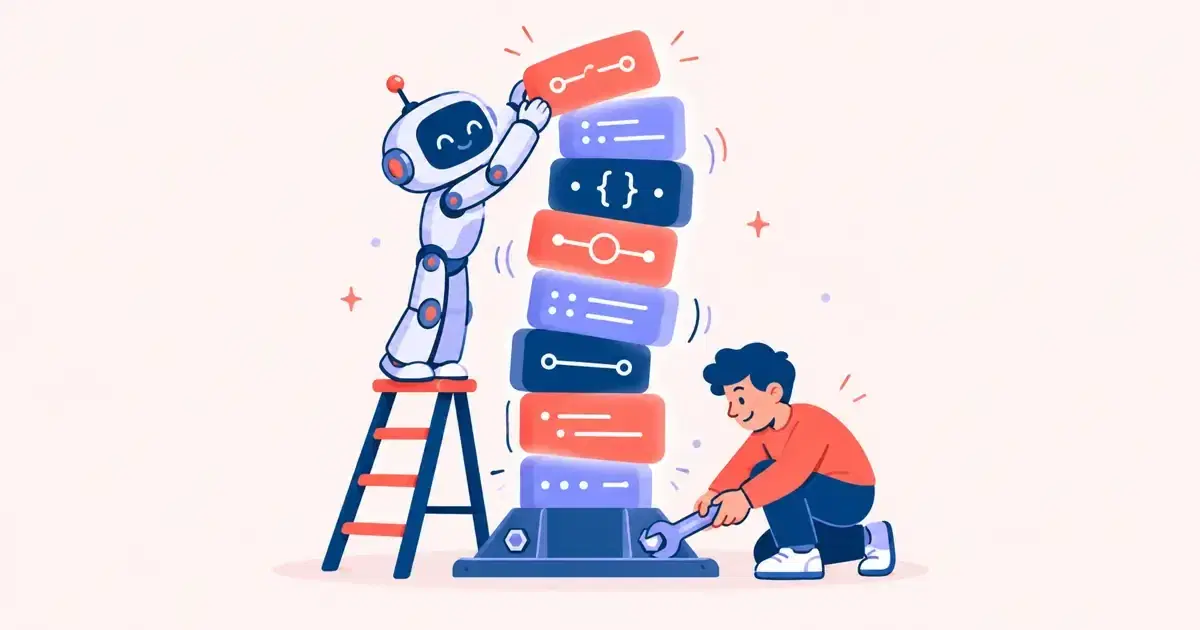
Agentic AI workflows are built using some core connected components that work together to complete business tasks. Large Language Models (LLMs) provide the intelligence, while additional layers manage planning and other functionalities required for effective AI workflow automation. Together, we can learn how these components work in real time.
Large Language Models (LLMs)
Large Language Models (LLMs) act as the intelligence layer of an Agentic AI system. They help AI agents understand user requests, process information, generate responses, summarize content, and support decision-making.
Many enterprise AI solutions use LLMs for customer support, knowledge search, report creation, and business assistance. However, LLMs alone cannot manage complete workflows. Additional components are needed to help agents take action and interact with business systems.
Agent Orchestration Layer
The AI agent that moves work from one step to the next. It handles task order, decision routing, and workflow execution. Rather than assigning all responsibilities to a single agent, multiple AI agents can divide the work among themselves.
In some workflows, multiple AI agents handle different tasks. The agent orchestration layer coordinates these agents, manages task flow, and ensures the workflow reaches the intended business goal.
Memory and Context Management
How do AI agents keep track of important information during and after a workflow? Short-term memory stores details related to the current task, while long-term memory keeps useful historical information such as customer preferences, previous interactions, and business knowledge. Good memory management helps agents make better decisions.
Enterprise Data Sources
AI agents need access to trusted business information to perform their tasks effectively. Data can come from databases, knowledge bases, document repositories, CRM platforms, ERP systems, and other enterprise applications. Access to accurate data helps improve workflow quality, decision-making, and operational reliability.
AI agents can support more business functions when they are linked to enterprise tools and applications. Through APIs and integrations, agents can create records, update information, send notifications, generate reports, and trigger workflows. Such connections allow Agentic AI workflows to work across multiple business systems without manual effort.
Monitoring and Observability
Monitoring helps organizations understand how AI agents and workflows are performing. Teams can track task completion speed, errors, and overall performance. Monitoring also supports governance, compliance, security, and continuous improvement. Insights collected from ongoing operations help businesses improve workflow efficiency and achieve better results over time.
Implementation Framework for Agentic AI Workflows
Every implementation needs a clear plan. Rather than automating everything at once, organizations should take a step-by-step approach and follow a structured framework to ensure that AI agents deliver accurate results. Let's look at the key steps involved.
Step 1: Identify High-Impact Business Processes
Start by finding processes that take a lot of time, involve multiple steps, or require frequent decisions. Customer onboarding and employee onboarding are good starting points because they involve multiple steps and require coordination across different systems.
IT support and invoice processing are suitable for Agentic AI because they often involve repetitive tasks, data handling, and decision-making.
Step 2: Define Agent Roles and Responsibilities
Each AI agent has a specific responsibility. Some agents gather information, while others verify data, make decisions, or perform actions. Well-defined roles help workflows run smoothly and reduce confusion.
Step 3: Connect Enterprise Data and Systems
AI agents need proper access to relevant data to work effectively. Connecting them to business systems, databases, and applications helps them understand information better and finish tasks more accurately.
Step 4: Define How Agents Make Decisions and Take Actions
Agents should be able to analyze information, choose the next action, and complete tasks automatically. Clear rules should also be in place for situations that require human review or approval.
Step 5: Implement Human-in-the-Loop Controls
Human oversight remains important for sensitive decisions. Financial approvals, compliance checks, and legal reviews often require human involvement to ensure accuracy and accountability.
Step 6: Monitor, Evaluate, and Optimize
After deployment, organizations should regularly review workflow performance. To track results, identify issues, and make continuous improvements, organizations should regularly monitor the performance of their Agentic AI workflows.
More than automating repetitive tasks, agentic AI understand business goals and completes actions with minimal human effort. Explore how enterprises apply Agentic AI in different business functions.
Customer Support Automation
What do customer support teams handle every day? They handle many customer queries, problems, and support tickets. What if most of these interactions could be handled automatically?
Agentic AI can understand customer issues, access account information, provide solutions, and escalate cases when human assistance is needed. Faster responses and quicker issue resolution improve customer satisfaction.
IT Service Management
IT teams spend a lot of time handling technical problems. By introducing Agentic AI, systems can monitor, detect problems, create tickets, perform basic fixes, and alert teams when human expertise is required. Faster issue resolution helps reduce downtime and improve operational efficiency.
Sales and Revenue Operations
Sales teams often spend a large part of their day managing leads, updating CRM records, and keeping track of follow-ups. Agentic AI helps simplify these activities by analyzing lead information, prioritizing opportunities, scheduling meetings, and updating sales systems automatically. Such support allows sales teams to focus more on customers and improving sales performance.
Supply Chain Optimization
Supply chain operations depend on accurate inventory management, smooth supplier coordination, and timely deliveries. Agentic AI helps businesses stay on top of these activities by monitoring inventory levels, identifying shortages, recommending replenishment actions, and supporting supplier communication. Better visibility across the supply chain helps organizations work smoothly and adjust faster when demand changes.
HR and Employee Experience
HR teams are responsible for many employee-related activities, from onboarding and training to answering routine questions and managing documents. Businesses can use Agentic AI to manage many of these tasks and make daily work faster and easier. Employees receive quicker support, while HR teams can spend more time on people-focused initiatives and workforce development.
Knowledge Management
Agentic AI helps employees find the information they need without spending time searching through different sources. By retrieving relevant content, summarizing documents, and providing useful recommendations, AI agents help teams work more efficiently and make informed decisions.
Governance, Security, and Compliance Considerations
Autonomous AI agents can access business systems, work with sensitive data, and perform actions across different departments. Without proper controls, organizations face security risks, compliance issues, and unexpected outcomes. To manage these challenges, organizations should follow several important governance and security practices.
Access Control and Permission Management
AI agents should use only the information and systems required to perform their tasks. Giving unnecessary permissions can increase security risks and expose sensitive business data.
To avoid these risks, organizations should:
Define clear access permissions based on agent responsibilities.
Limit access to only the systems and data required for specific tasks.
Implement strong authentication methods for agent access.
Regularly review and update permissions.
Monitor agent activities to identify suspicious access.
Data Privacy and Regulatory Compliance
Many Agentic AI workflows work with customer data, payment records, and other important business data. Without proper protection, organizations face compliance problems.
To maintain data privacy and compliance, organizations should:
Apply data masking for confidential information.
Define clear data retention and deletion policies.
Restrict access to sensitive business data.
Ensure compliance with applicable industry and regional regulations.
Auditability and Explainability
As AI agents make decisions and perform actions, organizations need visibility into how those decisions are made. Clear records help teams understand agent behaviour and investigate issues when necessary.
To improve transparency and accountability, organizations should:
Maintain detailed logs of agent activities.
Track decisions and workflow actions.
Record the data sources used by AI agents.
Review workflow history regularly.
Ensure important decisions can be explained and verified.
Risk Mitigation Strategies
Although Agentic AI can automate many business processes, some actions involve financial, legal, or operational risks. Proper safeguards help prevent unwanted outcomes.
To reduce risks, organizations should:
Implement human review for high-risk decisions.
Define clear limits on agent actions.
Continuously monitor agent performance.
Test workflows before production deployment.
Establish alert mechanisms for unusual behaviour.
Conclusion
As enterprise operations become more complex, businesses need automation that can do more than follow predefined rules. Agentic AI workflows bring together planning, decision-making, and execution capabilities that help organizations streamline processes and improve productivity across departments.
Whether you're looking to automate internal operations, improve customer experiences, or build intelligent business workflows, Tart Labs can help you turn your vision into reality. As a top enterprise AI development company, we help businesses design and build AI solutions that perfectly match their goals. Connect with us and explore how our solutions transform your digital journey.
AI coding tools speed delivery but studies show more duplication, less refactoring and weaker stability. What the 2026 data says and how to contain the debt.