

Written by Gowtham Raj, Director at TartLabs, who leads custom software and modernization engagements for manufacturing, logistics, and enterprise clients.
The Short Answer
Three things work well in 2026: using AI to understand old code, using it to migrate well-defined, repetitive changes at scale, and keeping humans validating the result. The thing that works least well is asking AI to convert an entire platform and trusting the output. The published evidence supports roughly a halving of effort on scoped migrations, not a dramatic gain on whole programmes.
Key Takeaways
- Google's 39-migration study found about 50% less total time than earlier manual efforts, with 74.45% of code changes generated by the LLM (a self-assessed estimate from three developers over twelve months).
- Amazon reports about 4,500 developer-years saved upgrading production Java applications from Java 8 or 11 to 17, a vendor figure for a very uniform task.
- Discovery is the safest use of AI. Explaining code, extracting business rules and generating documentation come before any conversion.
- Gartner predicts more than 70% of mainframe exit projects started in 2026 will fail to deliver intended benefits because GenAI is overestimated.
- Humans still own correctness. Google's engineers reviewed and edited the model's output, and the 50% saving already includes that work.
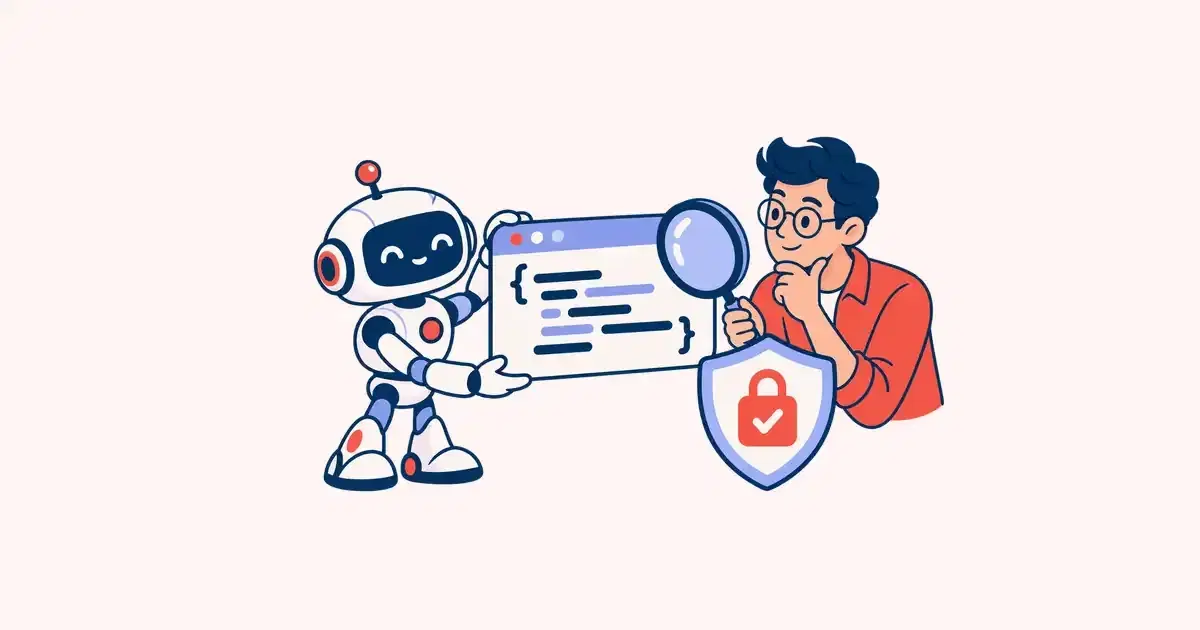
Use 1: Understanding Code Nobody Has Read in Years
The most defensible use of AI in modernization is reading. An Open Mainframe Project mentorship dispatch from July 2026, titled "Discovery Is Not Migration", puts the dividing line clearly: AI helps most with reading and explaining legacy code, surfacing embedded business rules and generating documentation, and struggles most with automated conversion that must preserve exact business semantics. Its author describes the evidence as still being gathered, so treat it as practitioner opinion rather than measurement.
Thoughtworks supports the same split with a number. Their August 2024 write-up reports cutting reverse-engineering time by two thirds on a 15-million-line programme. This is one phase on one codebase, so it shows where the gain sits and does not predict yours.
This is also the cheapest place to start. A discovery pass produces documents a human can check, so a wrong answer is caught before it becomes wrong code. For the longer reasoning on why unreadable systems stall AI projects, see why legacy systems block AI adoption.
Use 2: Migrating Repetitive, Well-Defined Changes at Scale
Where a change is mechanical and repeated across thousands of files, AI has real, measured results.
Google's paper, "Migrating Code At Scale With LLMs At Google" (April 2025), covers 39 distinct migrations by three developers over twelve months. The LLM produced 74.45% of the code changes, and the developers estimated about a 50% reduction in total migration time compared with earlier manual efforts. The examples included moving 32-bit IDs to 64-bit and replacing the Joda time library with Java's java.time.
Amazon's August 2024 post says Amazon used its Q Developer tool to move tens of thousands of production applications from Java 8 or 11 to Java 17, saving about 4,500 years of development work and $260 million a year in cost, mainly through performance gains that let teams remove hosts. That is a vendor using its own tool on its own estate, so read it as an upper bound.
What these have in common is the point. Each is a bounded transformation with a clear before and after, and each can be checked by existing tests. Nothing here is a general promise that AI can modernize an arbitrary system.
| Source | Task | Reported effect | Caveat |
|---|---|---|---|
| 39 scoped code migrations | About 50% less total time | Developer self-estimate | |
| Amazon | Java 8/11 to 17 upgrades | About 4,500 developer-years saved | Vendor-reported, uniform task |
| Thoughtworks | Reverse engineering | Two thirds less time | One phase, one codebase |
Practice 3: Keeping Humans on Validation
Google's 50% saving is net of human work. The developers were reviewing, correcting and validating what the model produced, and the study frames the model as an assistant inside an existing review process. Our reading of the paper is that the saving came from the AI doing the first draft of each change while tests and engineers decided whether it was right.
This matters for planning. If you budget for AI output to flow straight into production, you will be the case study in the next section.
What Does Not Work Yet: Whole-Platform Conversion on Trust
In June 2026 Gartner published a prediction that more than 70% of mainframe exit projects started in 2026 will fail to deliver their intended benefits, because organizations overestimate what generative AI can do. Gartner's report, "Too Big to Fail," appeared in April 2026, as The Register reported, and the press release followed in June. Gartner analyst Alessandro Galimberti pointed to a gap between GenAI marketing and its real-world ability to migrate complex legacy code.
The failure mode is easy to describe. A model can translate COBOL into Java that compiles and looks right, while quietly changing how rounding, batch ordering or error handling behaves. The Open Mainframe dispatch adds a related warning, reporting that a vendor cautioned a conversion can be functionally identical yet no more valuable than the old code.
Failure was common before AI as well. A 2022 vFunction survey run by Wakefield Research of 250 U.S. developers and architects found 79% had at least one modernization project fail, with mis-set expectations (43%) and organizational restructuring (37%) the top reasons. The sponsor sells modernization tooling and the data predates today's AI tools, so use it only to show that the people problems are old ones.
A Sequence That Matches the Evidence
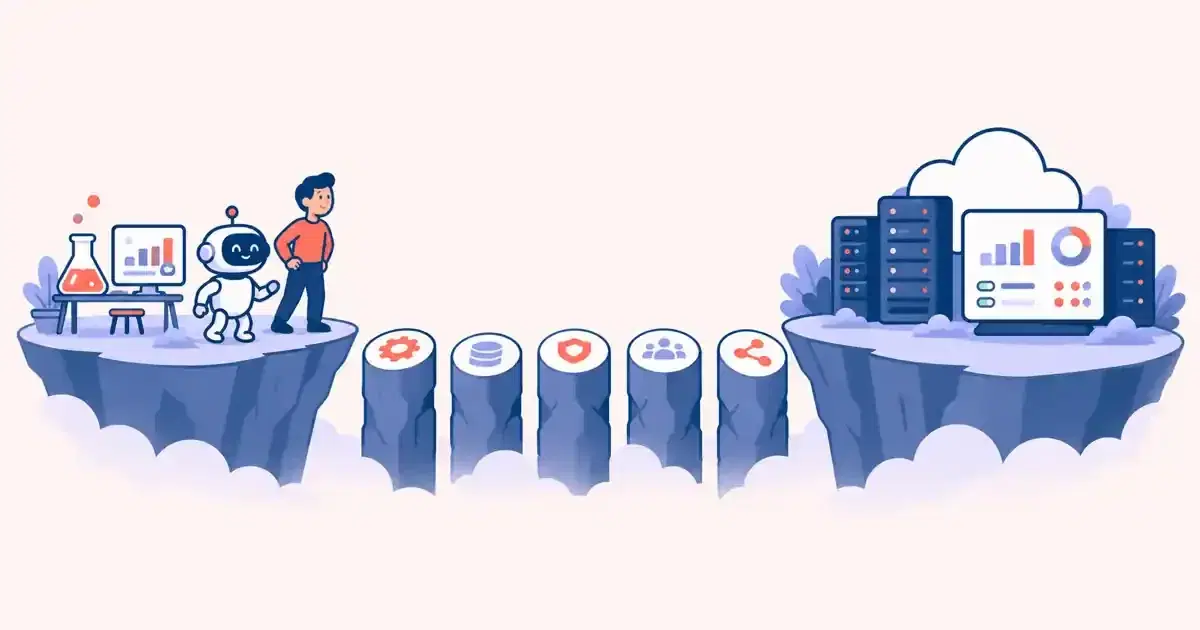
- Start with discovery. Run AI over one module, have its owner check the output, and measure the time saved on your own code.
- Pick the repetitive changes. Framework upgrades, library swaps and dependency updates behave like the Google and Amazon cases. Do these first.
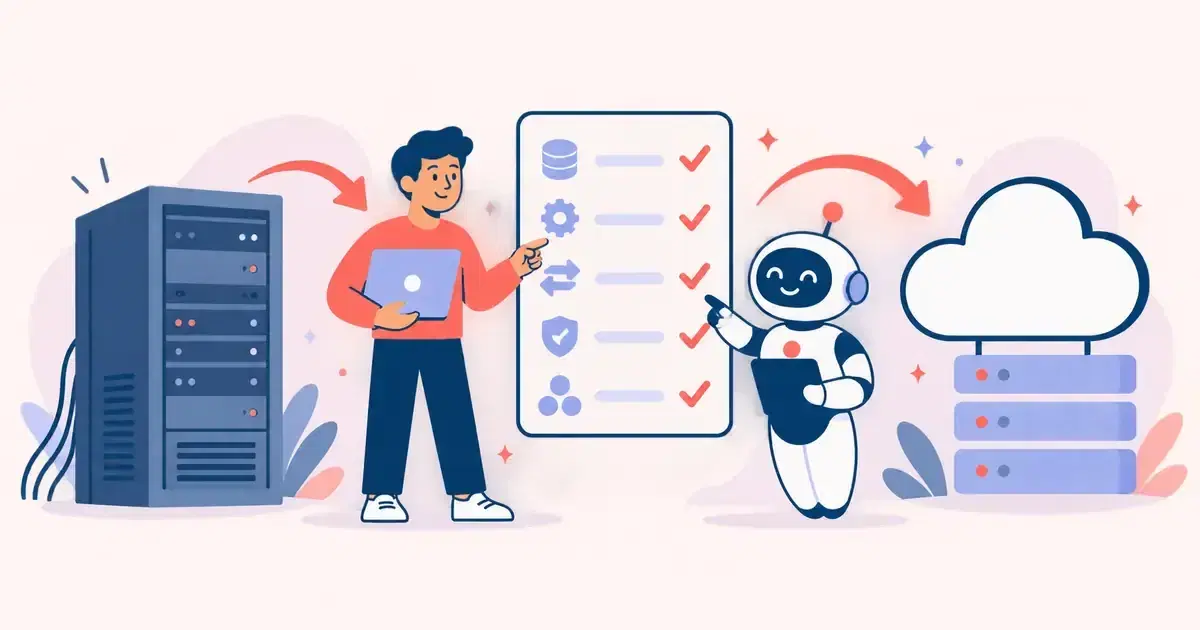
- Modernize in slices. Move one component at a time, keep the old system running, and compare behaviour before cutting over. Our guide to integrating existing systems with new software covers the sequencing.
- Require tests before translation. If a module has no tests, write characterization tests first, since they are what lets you trust a change set like the 74.45% AI-generated one in Google's study.
- Name a human owner per module. Someone must be able to say the new behaviour is correct.
- Tie it to your wider AI plan. Modernization is a means, not the goal. Our AI strategy for software companies pillar explains how it fits with data and delivery priorities. For timing, see how long AI-assisted legacy modernization takes.
The Bottom Line
What works is narrower than the marketing and still worth having. AI reads old code faster, handles repetitive migrations at a scale people cannot, and gives you a better plan sooner. It does not remove the need for tests, owners and incremental cutovers, and the programmes that skip those are the ones Gartner expects to miss their targets.
If you want a second opinion on where to start, or a scoped pilot on one of your systems, get in touch. We will tell you plainly where AI helps and where it does not, and a dedicated team can run the first pilot without pulling your own engineers off the roadmap.