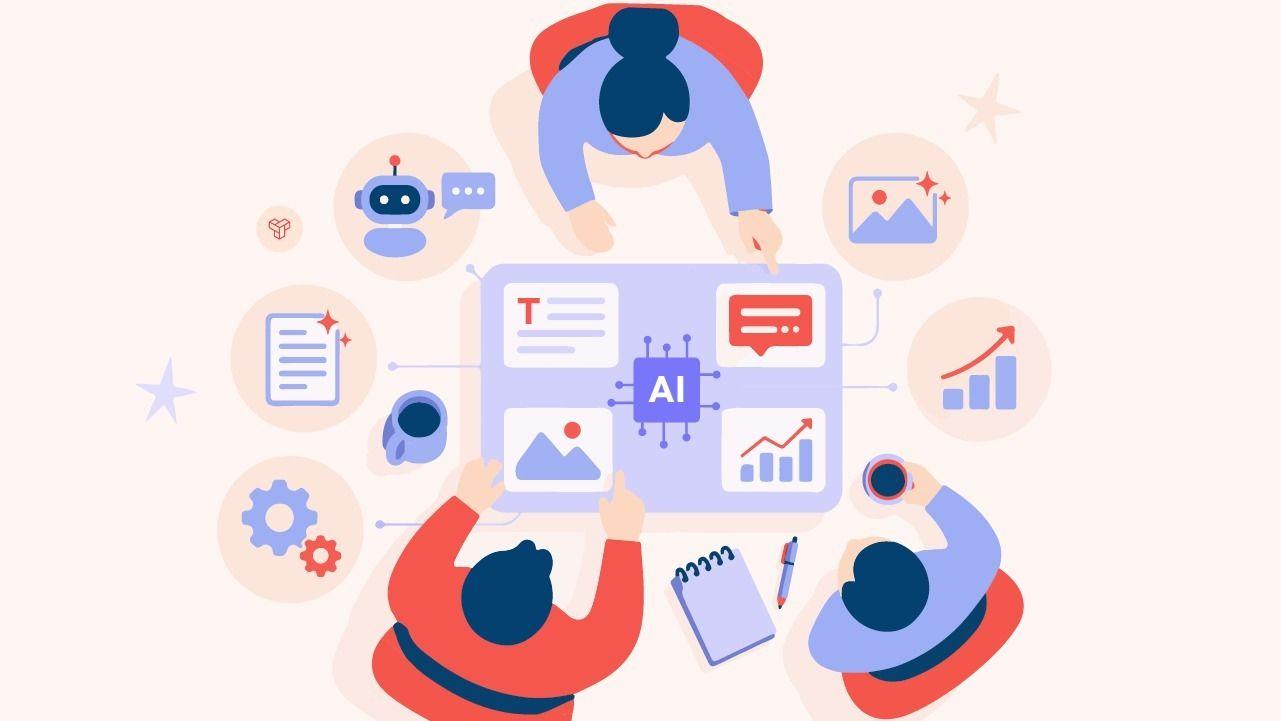
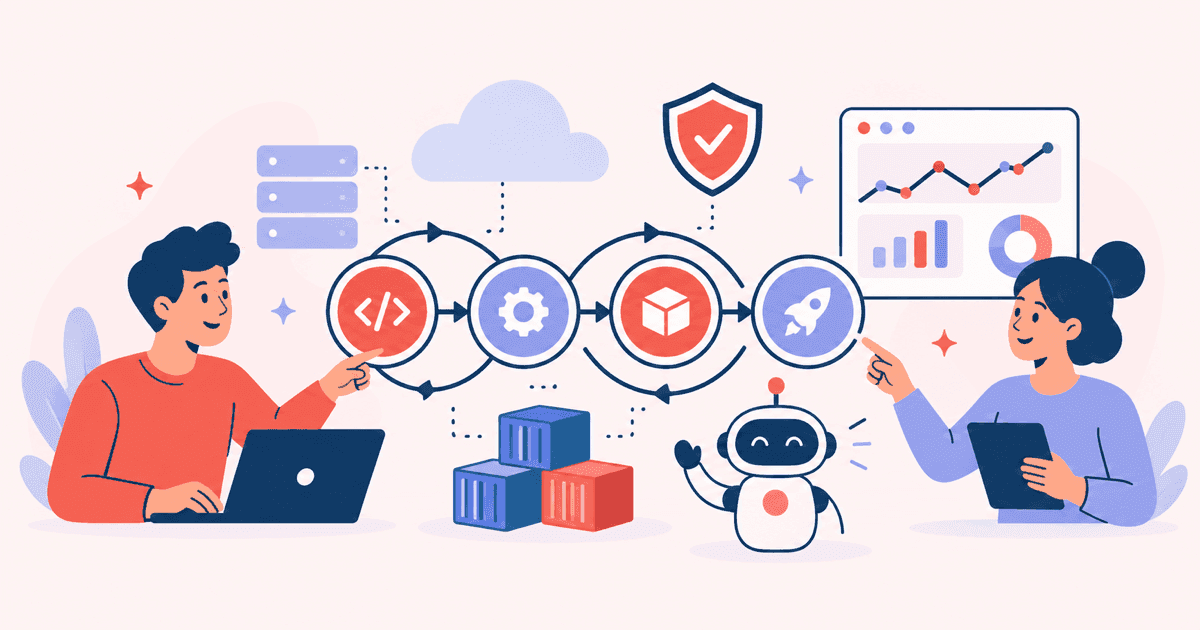
Do you want to improve business operations with AI? Explore Generative AI solutions for businesses that simplify tasks, support teams, and improve customer handling.
By Tart Labs·Published
Want to start a Project?
share
share
Introduction
Do you want to handle business operations faster without increasing workload every day? Many companies now turn toward Generative AI solutions to manage routine tasks, improve customer communication, and simplify daily processes. From marketing campaigns and sales activities to customer support and software development, businesses now look for smarter ways to save time and manage operations smoothly.
Earlier, companies depended heavily on manual work and basic automation tools that handled only limited tasks. But today, Generative AI applications help businesses create content, respond to customer queries, organize information, generate code, and support teams with faster task execution. This helps businesses manage operations more productive without putting extra pressure on employees.
As customer expectations continue to grow, businesses also need faster service, better communication, and scalable operations. This is why many organizations now invest in AI tools for businesses and enterprise AI solutions to stay competitive in the digital market.
In this blog, we will explore the best generative AI solutions for businesses, popular AI tools, real-world business use cases, implementation strategies, common challenges, and future business trends.
What Are Generative AI Solutions in a Business Context?
Generative AI solutions handle routine tasks, create content, support customer interactions, and handle everyday processes more efficiently.
Traditional software usually works based on predefined commands and limited workflows. Generative AI works more intelligently by creating written content, visual assets, code snippets, summaries, and business-related responses using user prompts, data, and contextual understanding.
Today, businesses use Generative AI tools for marketing campaigns, customer support, software development, sales communication, document creation, and workflow automation. These AI-powered business solutions help teams complete work faster, simplify day-to-day operations, and manage business activities with better speed and accuracy. Generative AI applications in business support startups and large enterprises in managing operations more productively.
Difference Between Traditional AI vs Generative AI
Traditional AI
Generative AI
Follows predefined rules and workflows
Creates new content and responses dynamically
Focuses mainly on data analysis and predictions
Makes text, images, code help, voice replies, and useful business information
Handles repetitive and fixed tasks
Supports creative and adaptive tasks
Frequently Asked Questions (FAQ)
Generative AI solutions help businesses create content, handle customer queries, generate insights, and automate repetitive tasks. Companies use these systems to handle daily work more easily, cut down repetitive tasks, and help teams make better choices across marketing, support, sales, and development.
Let's connect and create something amazing together!
Got an idea or project in mind? Whether it's custom software, a dedicated dev team, or help with digital transformation, we're here for it. Reach out—we'll bring your vision to life.
Contact us
Prefer to speak directly? You’ll find our address, email, and contact details right here.
Office Location
Block A1 Third Floor, Rathinam TechZone, SEZ Campus Pollachi Main Road, Eachanari, Coimbatore, Tamil Nadu 641021, India
Thinking through a new idea or stuck with a challenge? Drop us a message—we'll listen, brainstorm, and help move things forward.
Limited flexibility in complex scenarios
Understands context and provides intelligent outputs
Requires structured input and logic
Works with prompts, natural language, and patterns
Mostly used for automation and analytics
Used for content creation, chatbots, coding, and personalization
Gives fixed outputs based on programming
Produces unique outputs for different requests
How Generative AI Fits Into Modern Business Workflows
Modern businesses handle multiple operations every day, from customer communication and marketing campaigns to reporting, sales management, web development, mobile app development, and custom software development. Managing these activities manually often consumes time, increases workload, and slows down business processes. Generative AI now helps businesses simplify these operations with faster and smarter workflows. AI automation for businesses is becoming a key part of how companies streamline and manage daily tasks.
Marketing teams now rely on Generative AI for website articles, promotional emails, social media captions, ad copy, and product descriptions within minutes. Customer support teams use AI chatbots to answer customer queries instantly and provide support at any time of the day. Sales teams use AI tools to generate personalized messages, summarize meetings, and organize customer information more efficiently.
Software companies also use Generative AI to assist developers with programming assistance, issue detection, and faster development cycles. HR teams use AI solutions for resume screening, employee communication, and internal documentation.
Instead of replacing human teams, Generative AI for business supports employees by reducing repetitive work and improving task completion speed.
Why Generative AI Is Becoming a Business Necessity
As digital competition increases, businesses now view Generative AI as a practical requirement instead of an optional technology.
Market Demand & Competitive Pressure
Customer expectations continue to grow across every industry. People now expect faster responses, personalized services, quick issue resolution, and smooth digital experiences from businesses. At the same time, companies face strong market competition and rising operational pressure.
To stay competitive, businesses now invest in enterprise AI solutions and AI tools to reduce manual workload. Companies that use Generative AI applications can create content faster, improve customer support, automate internal tasks, and launch products more quickly. Without modern AI-powered business solutions, they struggle with slower operations, delayed execution, and higher operational costs.
As more organizations adopt automation with AI, business generative AI tools continue to play an important role in long-term business growth and scalability.
Reduces manual work across repetitive business processes
Helps business teams prepare content faster
Provides faster customer responses through AI chatbots
Supports developers in handling programming work in less time
Simplifies documentation and report generation
Improves workflow execution across departments
Cost
Reduces dependency on large support teams
Minimizes operational overhead and repetitive labour costs
Lowers content production expenses
Helps businesses manage tasks with smaller teams
Reduces human errors and correction costs
Supports scalable operations without major infrastructure expansion
Innovation
Helps teams test ideas and campaigns faster
Supports faster product and software development
Improves personalization across customer experiences
Encourages data-driven business decisions
Enables businesses to launch services more quickly
Creates opportunities for new AI-driven business models
High-Impact Business Problems Generative AI Solves
Generative AI solutions help businesses solve operational delays, repetitive workloads, slow customer support, content production challenges, and software development inefficiencies.
Content Bottlenecks in Marketing Teams
Generative AI tools for businesses help marketing teams produce content faster and maintain consistency across campaigns. Businesses now use AI-powered business solutions for:
Blog writing and content ideas
Social media captions and ad copy
Email marketing campaigns
Product descriptions
SEO content optimization
Content personalization for different audiences
Scaling Customer Support Without Hiring
As customer inquiries increase, businesses often struggle to maintain fast response times and quality support. Expanding customer support teams also increases operational costs and management complexity.
Businesses use AI-powered customer support tools for:
Answers common customer questions
Handles order and service inquiries
Provides multilingual support
Manages support tickets
Assists customers with troubleshooting
Offers 24/7 customer assistance
Automating Repetitive Knowledge Work
Many business teams spend large amounts of time on repetitive tasks such as documentation, report preparation, data summarization, internal communication, and information management. These tasks reduce productivity and limit the time available for strategic work.
Generative AI solutions help automate knowledge-based business activities with better speed and accuracy. Businesses now use enterprise AI solutions for:
Report generation
Meeting summaries
Internal documentation
Email drafting
Data summarization
Knowledge base management
Speeding Up Product & Software Development
Software and product development teams often work under tight deadlines to launch projects with stable performance and reliable results. Manual coding, testing, debugging, and documentation can slow down development timelines.
Generative AI tools now support developers throughout the software development lifecycle. Businesses use AI-powered development solutions for:
Code generation and suggestions
Bug detection and debugging
Technical documentation
API integration support
Test case generation
Faster prototype development
Categories of Generative AI Solutions Businesses Are Adopting
Businesses now use Generative AI tools to simplify daily tasks, support customer interactions, and manage business activities more efficiently across departments. AI tools for business growth help companies manage tasks in a simple way.
Content Generation Platforms
Blog and Article Writing:
AI tools create blog posts and articles for marketing needs.
Social Media Content:
Generate captions, posts, and campaigns for social media channels.
Product Descriptions:
AI creates unique product copy for e-commerce.
SEO Content:
AI tools help write SEO-friendly content to boost search rankings.
Personalized Messaging:
AI customizes content based on customer behaviour.
Conversational AI & Customer Experience Tools
AI Chatbots:
Handle common customer queries and offer quick assistance.
Voice Assistants:
AI tools respond to voice commands and help users navigate services.
Multilingual Support:
AI chatbots assist customers in multiple languages.
Automated Ticketing:
AI tools organize customer issues and escalate them.
Personalized Recommendations:
AI tools suggest products or solutions based on customer preferences.
Visual & Creative AI
Image Generation:
AI creates unique images for marketing or branding.
Graphic Design:
AI assists in creating logos, banners, and creative visuals.
Video Production:
AI helps generate video clips and animations for campaigns.
Branding Assets:
AI tools produce consistent brand visuals across all channels.
Product Mockups:
AI creates realistic product mockups for presentations.
Code Generation & Developer Productivity Tools
Code Autocompletion:
AI suggests code as developers type, saves time.
Bug Detection:
AI tools identify bugs and vulnerabilities early in the development process.
API Integration:
AI helps integrate third-party APIs smoothly.
Test Automation:
AI generates automated test cases to speed up quality assurance.
Documentation Support:
AI tools generate technical documentation to help developers understand code faster.
Prototype Design:
AI speeds up the design and iteration of software prototypes, allows teams to move quickly from concept to launch.
Top Generative AI Tools for Businesses in 2026
Businesses now use Generative AI tools to manage daily workflows, support faster business activities, and strengthen modern business processes. Explore the best generative AI tools for software development to improve coding, testing, and product delivery speed.
Best AI Tools for Marketing Teams
ChatGPT
Helps marketing teams create blogs, social media captions, ad copy, email campaigns, and SEO-friendly business content faster.
Jasper AI
Supports businesses with brand-focused content creation, marketing campaigns, and long-form AI-powered copywriting tasks.
Copy.ai
Generates product descriptions, sales copy, email content, and promotional messaging for marketing and e-commerce teams.
Canva AI
Helps businesses create social media graphics, presentations, visual content, and branded marketing materials with minimal effort.
Best AI Chatbots for Customer Support
Intercom
Provides AI-powered customer support, live chat management, ticket handling, and personalized customer interactions across channels.
Drift
Supports businesses with AI chatbots for sales conversations, lead generation, and automated customer communication workflows.
Zendesk AI
Improves customer service operations with automated ticket responses, support management, and intelligent customer assistance features.
Freshchat
Helps businesses provide instant customer responses, chatbot automation, and multilingual customer support experiences.
Best AI Tools for Developers & Tech Teams
GitHub Copilot
Assists developers with code suggestions, faster programming, debugging support, and software development productivity improvements.
Tabnine
Offers smart coding assistance and helps developers manage programming tasks more efficiently in different coding environments.
Amazon CodeWhisperer
Helps developers generate secure code recommendations and simplify cloud application development processes.
Replit Ghostwriter
Supports developers with code generation, debugging assistance, and faster application prototyping for modern software projects.
Enterprise-Grade Generative AI Platforms
Microsoft Copilot
Supports enterprise productivity through AI-powered document creation, workflow automation, and business communication assistance.
Google Gemini
Helps businesses manage research, analytics, teamwork, and day-to-day business processes more efficiently across enterprise environments.
IBM watsonx
Provides enterprise AI solutions for automation, data analysis, governance, and scalable business AI applications.
Salesforce Einstein
Improves sales operations, customer insights, personalization, and CRM automation with AI-powered business intelligence features.
Real-World Examples: How Companies Are Using Generative AI
Businesses across industries now use Generative AI solutions to improve operations, automate workflows, and accelerate growth using the best gen AI solutions available in the market.
Generative AI is widely used in education, where it helps create learning materials, supports students with doubt-solving, and assists teachers in preparing lessons more efficiently.
In the fintech sector, companies use AI to detect fraud patterns, improve financial analysis, and provide personalized banking experiences for customers.
The healthcare industry also benefits from Generative AI, as it helps in patient record management, report summarization, and supporting doctors with faster insights for better decision-making.
AI in Marketing Automation
Companies also use enterprise AI solutions to personalize customer communication based on their behaviour, preferences, and purchase history. AI tools for businesses help marketers analyze campaign performance, generate content ideas, and improve audience engagement more effectively. With business automation using AI, marketing teams can launch campaigns faster, improve productivity, and focus more on strategy and brand growth instead of repetitive content tasks.
AI in Customer Support Optimization
To automate support ticket handling, customer communication, and multilingual assistance, companies started using Generative AI solutions. Generative AI solutions for enterprises improve response times, reduce customer waiting periods, and support 24/7 service availability. Thus, customer care teams support complicated customer cases while AI handles routine interactions.
AI in Product Development
Product teams also use enterprise AI solutions to analyze customer feedback, identify feature improvements, and support better product planning decisions. AI tools for businesses help teams test ideas quickly and simplify collaboration across departments. By using business automation with AI, companies can release products faster, improve software quality, and respond to market demands more effective without increasing operational complexity.
How to Choose the Right Generative AI Solution for Your Business
Businesses should choose Generative AI solutions based on operational goals, scalability, integration capability, business requirements, and long-term value.
Matching Tools to Business Goals
Identify the exact business problem before selecting AI-powered business solutions
Choose AI tools for businesses based on department-specific requirements
Select content-focused AI platforms for marketing and communication teams
Use AI chatbot solutions for customer support and service operations
Choose developer AI tools for software and product development teams
Focus on scalability if the business plans future expansion
Select enterprise AI solutions that support workflow automation and productivity improvements
Choose a platform that supports your company’s future digital growth and business expansion plans
Integration with Existing Systems
Choose Generative AI applications that connect easily with current CRM and ERP platforms
Verify compatibility with cloud infrastructure and internal business software
Select AI-powered business solutions with API integration support
Ensure smooth data synchronization across departments and workflows
Check whether the AI platform supports third-party business applications
Avoid tools that require major infrastructure replacement
Prioritize enterprise AI solutions with strong security and compliance support
Test integration performance before large-scale implementation
Budget vs ROI Considerations
Compare implementation cost with expected business value and productivity improvements
Focus on long-term operational savings instead of only initial pricing
Choose AI tools for businesses that reduce repetitive manual tasks
Evaluate how the platform improves customer experience and workflow speed
Analyze whether the AI solution helps reduce support and operational costs
Consider scalability before investing in enterprise AI solutions
Start with smaller AI implementations before expanding across departments
Track ROI through automation and business performance improvements
Is Your Business Ready for Generative AI?
Many businesses now turn to Generative AI solutions to simplify daily work and manage operations in a smoother and more flexible way. Before implementing AI-powered business solutions, companies should evaluate their operational readiness, business goals, technical infrastructure, and long-term digital strategy to ensure successful AI adoption and scalable business growth. Many organizations choose Tart Labs, a best generative AI company in India, for developing reliable AI-powered business solutions.
Identify repetitive business tasks suitable for automation
Evaluate existing workflows and operational challenges
Check data quality and system readiness for AI integration
Define clear business goals before selecting AI tools
Train teams to work with enterprise generative AI solutions effectively
Start with small AI use cases before large-scale implementation
Ensure security, compliance, and data privacy measures
Measure productivity improvements and ROI after implementation
Conclusion
Generative AI continues to reshape how businesses manage operations, customer interactions, content creation, and software development. Companies across industries now use AI-powered business solutions to handle complex tasks with better speed and accuracy while supporting long-term digital growth.
If you want to integrate Generative AI solutions into your business operations, contact us. Our team at Tart Labs can help you build scalable AI solutions tailored to your business goals and industry requirements.