How To Replace RPA With Agentic AI: A Complete Guide
Are you planning to move beyond traditional RPA? Discover how Agentic AI helps businesses automate complex workflows, improve decision-making, connect enterprise systems, and build a smarter approach to B2B process automation.
By Tart Labs·Published
Want to start a Project?
share
share
Introduction
Many businesses depends on Robotic Process Automation (RPA) to handle routine tasks and improve daily operations. It helps manage processes that follow the same set of rules. As a result, many organizations have improved efficiency while saving both time and costs.
However, business processes have changed. Companies now deal with large amounts of data, changing customer needs, and workflows that involve documents, emails, and decisions that cannot always follow fixed rules. In these situations, traditional RPA may not be enough because it simply follows predefined instructions.
This is why many businesses are now looking to transform RPA with Agentic AI. Instead of replacing RPA completely, organizations are adding AI agents that can understand context, make decisions, and work across multiple business systems. This creates a smarter approach to enterprise automation and supports the next evolution of B2B process automation.
In this guide, you'll learn what RPA and Agentic AI are, how they differ, when businesses should modernize their automation strategy, and how to transform RPA with Agentic AI step by step.
What Is Robotic Process Automation (RPA)?
With Robotic Process Automation (RPA), software bots take care of routine business tasks. These bots work with digital applications just like people do by logging into systems, entering data, updating records, generating reports, and moving information between applications. Since they follow predefined instructions, they can complete tasks quickly and accurately without constant human involvement.
RPA has become an important part of business process automation because it helps organizations reduce manual work, improve productivity, and lower operating costs. It is widely used in areas such as finance, human resources, customer service, healthcare, and supply chain management for tasks like invoice processing, employee onboarding, CRM updates, and report generation.
While RPA is highly effective for structured and repetitive workflows, it cannot think, learn, or make decisions. As business processes become more complex, many organizations are expanding their automation strategy by combining RPA with Agentic AI.
What Is Agentic AI?
As businesses handle more complex workflows, they need automation that can do more than follow fixed instructions. This is where Agentic AI enters. Instead of simply completing predefined steps, Agentic AI uses AI agents to understand business goals, make decisions, and take the right actions with minimal human support.
What makes Agentic AI different?
Goal-oriented approach: AI agents focus on achieving the final business goal instead of just following a list of instructions.
It can work with emails, documents, customer requests, and other information before deciding what to do next.
Frequently Asked Questions (FAQ)
Robotic Process Automation (RPA) helps businesses complete routine work by using software bots that follow fixed business rules. Agentic AI uses AI agents that understand business goals, make decisions, adapt to changing situations, and complete more complex workflows across enterprise systems.
Let's connect and create something amazing together!
Got an idea or project in mind? Whether it's custom software, a dedicated dev team, or help with digital transformation, we're here for it. Reach out—we'll bring your vision to life.
Contact us
Prefer to speak directly? You’ll find our address, email, and contact details right here.
Office Location
Block A1 Third Floor, Rathinam TechZone, SEZ Campus Pollachi Main Road, Eachanari, Coimbatore, Tamil Nadu 641021, India
RPA and Agentic AI are both used in automation, but they work best in different situations. RPA is designed to perform repetitive tasks by following predefined rules, while Agentic AI uses AI agents to understand business goals, make decisions, and complete tasks across multiple systems. As businesses move toward next-generation B2B process automation, understanding these differences helps organizations choose the right approach for each workflow.
Feature
RPA
Agentic AI
Purpose
Automates repetitive tasks
Achieves business goals
How it works
Follows predefined rules
Understands goals and plans actions
Decision-making
No
Yes
Learning
No
Can improve using context and feedback
Adaptability
Limited
High
Data handling
Structured data
Structured and unstructured data
Workflow type
Fixed workflows
Dynamic workflows
Exception handling
Needs human support
Can handle many exceptions on its own
Human involvement
Higher
Lower with Human-in-the-Loop when needed
Best for
Routine tasks
Complex business processes
Key differences:
Rule-based vs goal-based: RPA completes business tasks based on fixed rules. Agentic AI starts with a business goal and decides the best way to complete it.
Fixed vs adaptive workflows: RPA works best when processes stay the same. Agentic AI can adjust when business rules, data, or situations change.
Execution vs decision-making: RPA performs tasks, while AI agents can reason, plan, and make decisions before taking action.
Structured vs unstructured data: RPA mainly works with forms, tables, and databases. Agentic AI can also understand emails, PDFs, documents, and customer conversations.
Task automation vs end-to-end automation: RPA automates individual tasks, while Agentic AI can manage complete business workflows across multiple enterprise systems.
For example, imagine an invoice processing workflow. An RPA bot can capture invoice details and update an ERP system if the invoice follows a fixed format. If the format changes or information is missing, the process usually stops and requires human help. An Agentic AI system can read invoices from different suppliers, understand the missing details, gather additional information, and complete the process with minimal manual effort.
Why B2B Businesses Are Replacing RPA with Agentic AI
Better Handling of Complex Workflows
Traditional RPA works well for simple, repetitive processes, but modern business workflows are far more complex. Agentic AI helps businesses manage these challenges by:
Understands the overall business goal instead of following only fixed rules.
Connects CRM, ERP, HRMS, APIs, and knowledge bases to complete end-to-end workflows.
Adapts to changing business rules without frequent reconfiguration.
Handles unexpected situations and keeps workflows moving.
Improves workflow automation across multiple enterprise systems.
Smarter Decision-Making
Unlike RPA, Agentic AI can analyze information before taking action. AI agents help businesses by:
Understands business context before making decisions.
Selects the most suitable action for each situation.
Prioritizes customer requests and business tasks.
Supports faster approvals across departments.
Improves decision accuracy and response times.
Reduced Manual Intervention
Traditional RPA often requires employees to step in when something unexpected happens. Agentic AI reduces manual work by:
Identifies missing or incomplete information.
Retrieves data from connected enterprise systems.
Resolves many workflow exceptions automatically.
Requests human approval only when required through Human-in-the-Loop.
Reduces maintenance efforts and improves productivity.
Improved Customer Experience
Customers today expect quick responses and better service. Agentic AI improves it by:
Understands customer questions and requests.
Retrieves relevant information from CRM systems and knowledge bases.
Provides faster and more personalized responses.
Coordinates actions across multiple enterprise applications.
Improves customer satisfaction with consistent support.
Higher Automation Potential
Many business processes remain manual because they involve decisions and changing information. Agentic AI expands automation by:
Automates decision-heavy business processes.
Works with both structured and unstructured data.
Connects multiple enterprise systems in one workflow.
Supports AI-driven process automation across departments.
Accelerates digital transformation and next-generation B2B process automation.
How To Replace RPA With Agentic AI
Replacing RPA with Agentic AI is not about switching from one technology to another overnight. It is a step-by-step process that helps businesses modernize Agentic AI for enterprise automation while protecting existing investments. By following a phased approach, organizations can reduce risks, improve business process automation, and build a strong foundation for Enterprise AI.
Step 1. Assess Your Existing Automation Landscape
Start by reviewing your current automation environment. Identify existing RPA bots, workflows, manual tasks, system dependencies, and areas that need frequent maintenance. This assessment helps businesses understand which processes are working well and which are ready for RPA modernization.
Step 2. Identify Processes Ready for AI Agents
Not every workflow needs Agentic AI. Focus on processes that require decision-making, changing business rules, document handling, or customer interactions. At the same time, keep simple rule-based tasks with RPA, where it continues to deliver the best value.
Step 3. Prioritize High-Impact B2B Processes
Begin with processes that deliver the greatest business value. Consider customer impact, operational costs, process complexity, and expected ROI. Starting with high-impact workflows helps organizations demonstrate results before expanding Enterprise AI across the business.
Step 4. Choose the Right Agentic AI Platform
Select a platform that supports AI agents, enterprise integrations, security, scalability, and Human-in-the-Loop capabilities. Many businesses also work with an Agentic AI development company or use Agentic AI development services to speed up implementation and reduce deployment challenges.
Step 5. Design Goal-Oriented AI Agents
Design AI agents around business objectives instead of predefined scripts. Clearly define the task, decision limits, required enterprise knowledge, connected tools, and success criteria. This helps AI agents complete workflows with greater accuracy and consistency.
Step 6. Connect Enterprise Systems
Connect AI agents with CRM, ERP, HRMS, APIs, databases, and knowledge bases. Access to enterprise data allows AI agents to retrieve information, complete workflows, and support better decision-making across different business functions.
Step 7. Implement Human-in-the-Loop Governance
Give AI agents the freedom to automate tasks while keeping humans involved for important approvals and sensitive decisions. Clear governance, audit logs, and review checkpoints help businesses build responsible, secure, and trustworthy Enterprise AI solutions.
Step 8. Test, Measure, and Optimize
After deployment, continuously monitor automation performance, accuracy, response time, and business outcomes. Regular improvements help organizations refine AI agents, increase automation coverage, and support long-term digital transformation with next-generation B2B process automation.
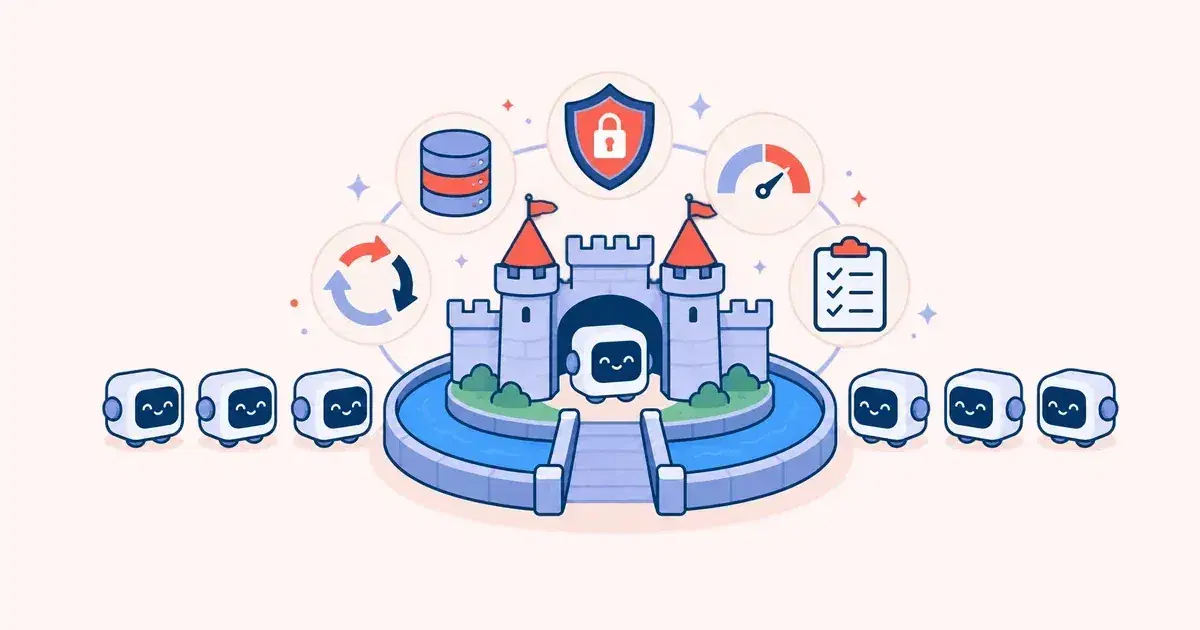
Building an Agentic AI solution is more than adding an AI model to your business. A successful Enterprise AI solution brings together multiple components that work as one system. Together, they understand business goals, make decisions, connect with enterprise applications, and complete workflows securely. This connected architecture helps businesses automate complex processes while maintaining reliability, governance, and better control.
AI Agents
AI agents are the core of the architecture. They receive a business goal and decide how to complete it.
They can:
Understand business objectives.
Break large tasks into smaller steps.
Select the right tools and systems.
Complete workflows across enterprise applications.
Handle exceptions during execution.
LLMs
Large Language Models (LLMs) provide the intelligence behind AI agents. They help AI agents understand information before taking action.
LLMs help by:
Understanding natural language.
Reading documents and emails.
Summarizing information.
Supporting business decisions.
Generating meaningful responses.
Memory
Memory helps AI agents remember important information so they can respond with better context.
It includes:
Short-term memory for the current task or conversation.
Long-term memory for customer history, business rules, and previous interactions.
Context that helps deliver more accurate and consistent responses.
Enterprise Systems
AI agents work more effectively when they have access to the business systems used every day.
Common integrations include:
CRM – Customer information and sales activities.
ERP – Finance, inventory, and operations.
HRMS – Employee records and HR processes.
APIs – Communication with internal and external applications.
Databases – Structured business data.
Knowledge Bases – Company policies, SOPs, and documentation.
Orchestration Layer
The orchestration layer keeps the entire workflow organized. It ensures every component works together smoothly.
Its role is to:
Assign tasks to AI agents.
Connect with enterprise systems.
Manage workflow sequences.
Coordinate multiple AI agents.
Monitor workflow progress.
Handle failures and retries.
Human Oversight
Even advanced AI systems need human supervision for important business decisions.
Agentic AI offers much more than task automation. By combining AI agents with enterprise systems, businesses can improve decision-making, simplify workflows, and automate more complex processes.
Intelligent Decision-Making
Agentic AI reviews available information before deciding what to do next.
Reviews business context before making decisions.
Decides the best way to complete the task.
Supports faster approvals and better planning.
Improves accuracy while reducing business risks.
Adaptive Workflows
Business processes continue to change, and automation should be able to keep up.
Adjusts workflows when business needs change.
Responds to new information without redesigning the entire process.
Handles changing business rules more effectively.
Helps businesses stay flexible and efficient.
Better Exception Handling
Unexpected situations are common in daily business operations.
Identifies issues before they interrupt the workflow.
Finds additional information to continue the process.
Sends requests for human review only when necessary.
Reduces workflow failures and manual effort.
Lower Operational Costs
Manual work and process delays often increase business expenses.
Reduces repetitive manual activities.
Improves process accuracy and reduces rework.
Makes better use of business resources.
Helps organizations lower operating costs over time.
Faster Execution
Business processes often slow down because information is spread across multiple systems.
Connects enterprise applications more efficiently.
Completes tasks with fewer delays.
Reduces waiting time between workflow steps.
Delivers faster business outcomes.
Increased Productivity
Employees can focus on more valuable work when routine tasks are automated.
Reduces time spent on repetitive activities.
Cuts down the effort required to complete routine processes.
Gives employees more time for customer interaction.
Improves overall workplace productivity.
Improved Customer Experience
Customers expect quick, accurate, and personalized service.
Delivers faster responses to customer requests.
Provides more relevant and consistent information.
Resolves issues with fewer delays.
Builds stronger customer relationships and trust.
Greater Scalability
As businesses grow, automation should grow with them.
Supports automation across multiple departments.
Handles increasing workloads without major changes.
Connects new enterprise systems as business needs grow.
Supports businesses as they grow.
Conclusion
If you're planning to transform your existing automation with Agentic AI, Tart Labs can help. As an Agentic AI development company, we design and build AI-powered solutions that match your business goals, integrate with your existing systems, and support long-term growth. Contact us today to discuss your project and discover how Agentic AI can help modernize your business operations.
Twelve questions to put to any AI development partner, backed by RAND, Gartner and MIT findings on why AI projects fail and what good answers sound like.