

Introduction
In today's fast-paced digital world, bringing a new product or service to market can be a daunting task. With countless ideas vying for attention, it's crucial to validate your concept and gather valuable user feedback early on. This is where the concept of Minimum Viable Product (MVP) development comes into play.
An MVP is a stripped-down version of your product or service, focusing on the core features and functionality necessary to attract early adopters and gather valuable user feedback. Think of it as a prototype that allows you to test the market and iterate on your idea before investing significant time and resources.
By developing an MVP, you can quickly validate your product idea, gather valuable user feedback, and make informed decisions about its future development. This iterative approach allows you to refine your product based on real-world insights, increasing its chances of success.
What is an MVP?
An MVP, or Minimum Viable Product, is a simplified version of a product or service. It's designed to include only the core features necessary to attract early adopters and gather valuable user feedback. The goal is to test the market, validate the product concept, and identify areas for improvement before investing significant time and resources in full-scale development.
Think of it as a proof of concept that allows you to gather real-world insights from potential users. By focusing on the essentials, you can quickly build and launch a basic version of your product, even if it's not perfect. This allows you to get feedback from real users early in the development process, which can help you make informed decisions about the direction of your product.
For example, if you're building a new social media app, your MVP might include only the core features of creating a profile, adding friends, and posting updates. You could then launch this basic version of the app to a small group of users and gather feedback on their experience. This feedback could help you identify potential issues with the user interface, discover missing features, or even uncover entirely new use cases for your app.
Why is MVP Development Important?
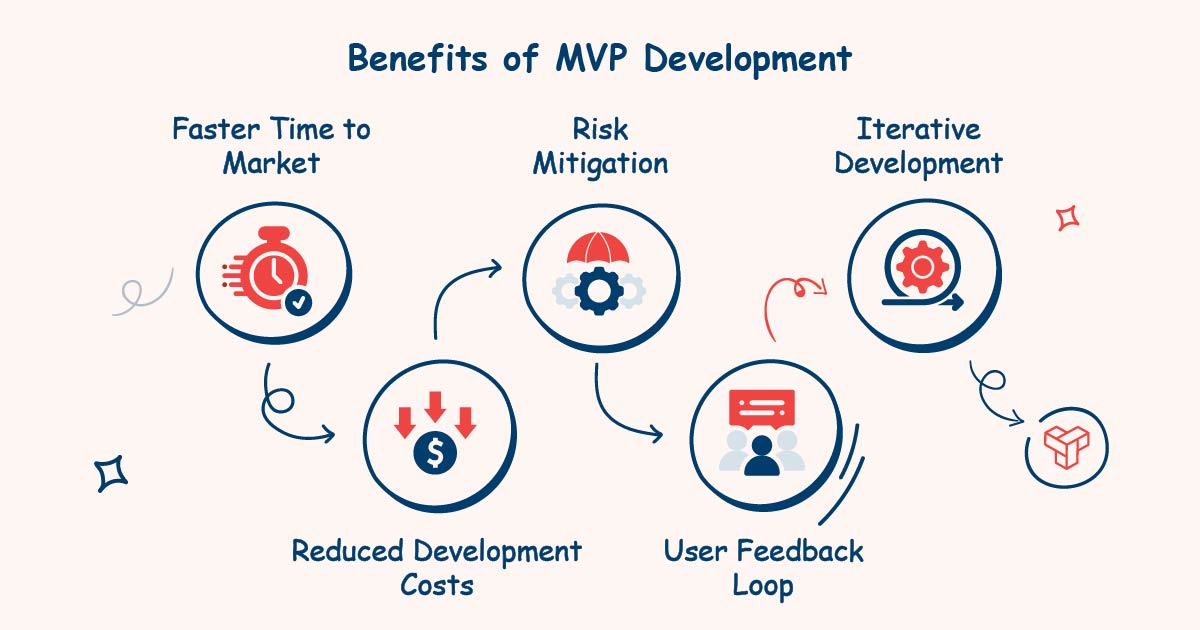
MVP development offers a multitude of benefits that can significantly impact the success of your product or service. Here are some key reasons why it's crucial:
-
Faster Time to Market: By focusing on the essentials, you can accelerate the development process and launch your product sooner. This allows you to capitalize on market opportunities and gain a competitive edge.
-
Reduced Development Costs: With an MVP, you can allocate resources efficiently and avoid unnecessary expenses. By prioritizing core features, you can minimize development costs and maximize your return on investment.
-
Risk Mitigation: Launching an MVP helps you identify potential risks and challenges early on. By gathering user feedback, you can make informed decisions and adjust your strategy accordingly, reducing the likelihood of costly failures.