How AI Is Revolutionizing Education: Developing AI-Powered Learning Apps
How AI-powered learning apps are changing personalized tutoring, grading, and adaptive learning, plus a practical guide to building one that students and teachers actually trust.
By Tart Labs·Published
Want to start a Project?
share
share
By Gowtham Raj, Director at TartLabs, leading AI and custom software work for education and enterprise clients.
An Introduction to AI-Powered Learning Apps
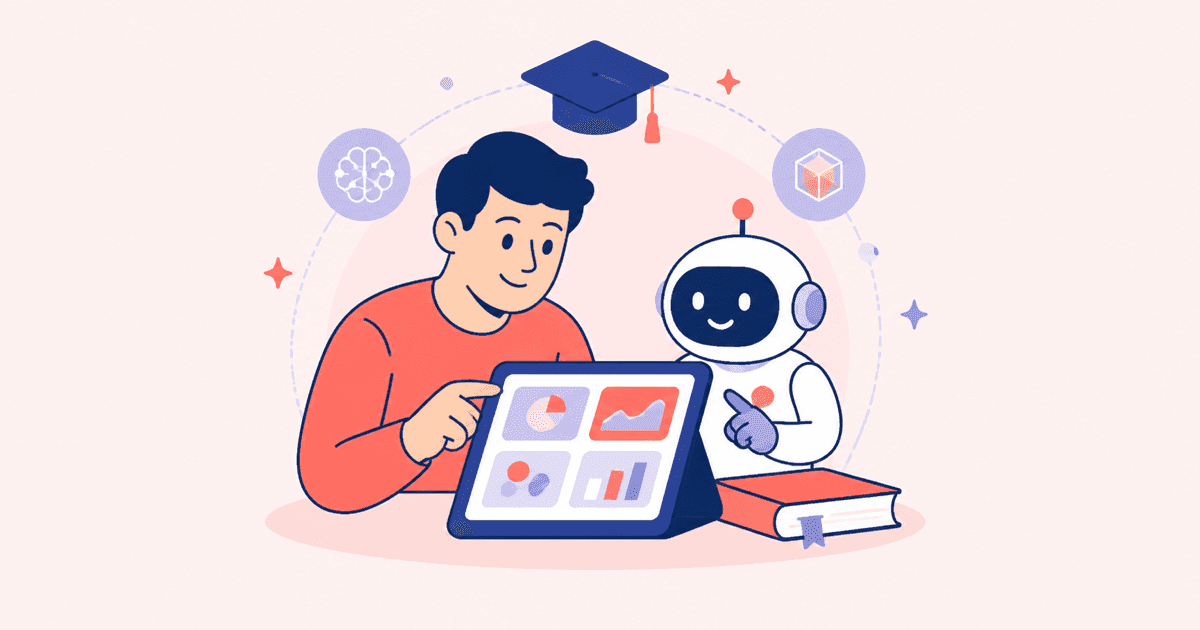
Thirty students in one classroom progress at thirty distinct speeds. Most education software, however, continues to teach as though there were only one. AI-powered learning apps address that fundamental mismatch. Their purpose is not simply to put "more technology in the classroom," but to make instruction adapt to each learner rather than forcing every learner to follow the same path.
This change is already measurable. Although just 32% of teachers currently use AI tools every week, those who do save an average of 5.9 hours a week across grading and lesson planning (Gallup and Walton Family Foundation, "Teaching for Tomorrow: Unlocking Six Weeks a Year With AI," 2025). Student adoption has accelerated even more quickly. Among U.S. teens, ChatGPT use for schoolwork doubled from 13% in 2023 to 26% in 2024. The most recent nationally representative figures, published by Pew Research Center in February 2026, put use of AI chatbots more broadly at 54%, with about 10% of teens relying on AI for all or most of their homework (Pew Research Center, "How Teens Use and View AI," 2026).
That adoption curve creates a clear opportunity for edtech founders and product leaders. Yet a credible AI-powered learning app must truly personalize instruction, not merely attach a chatbot to an existing course catalog. Doing that calls for a coherent architecture, a defensible approach to data, and sound boundaries around which decisions AI development should make. This guide examines both sides of the challenge: why AI is reshaping education now and what teams need to build an application that performs reliably in an actual classroom.
Key Takeaways
Weekly AI users among teachers reclaim an average of 5.9 hours a week; meanwhile, more than half of U.S. teens use AI chatbots to help with schoolwork, up from 26% just a year earlier
Projections put the global AI in education market at roughly $9.58 billion in 2026 and about $136.8 billion by 2035
Resilient products bring together adaptive learning paths, conversational tutoring, automated feedback, and analytics instead of depending on one capability
AI governance remains behind adoption: a school policy is reported by only 45% of U.S. principals, while most students say nobody has taught them responsible AI use
Strong development programs begin with one narrow, clearly defined learning outcome and keep people in the review loop
Understanding the Move Toward AI-Powered Learning Apps
Frequently Asked Questions (FAQ)
Scope has a major effect on cost. A configured white-label tutoring product may require a modest investment, whereas a custom application that includes adaptive sequencing, automated grading, and comprehensive compliance controls demands a larger build. The same cost factors are examined further in our guide to [the cost of integrating AI with existing software](/blog/cost-to-integrate-ai-into-existing-software).
Let's connect and create something amazing together!
Got an idea or project in mind? Whether it's custom software, a dedicated dev team, or help with digital transformation, we're here for it. Reach out—we'll bring your vision to life.
Contact us
Prefer to speak directly? You’ll find our address, email, and contact details right here.
Office Location
Block A1 Third Floor, Rathinam TechZone, SEZ Campus Pollachi Main Road, Eachanari, Coimbatore, Tamil Nadu 641021, India
Thinking through a new idea or stuck with a challenge? Drop us a message—we'll listen, brainstorm, and help move things forward.
For over a decade, education technology has included personalization tools ranging from adaptive quizzes to recommendation engines. Large language models introduce a different level of capability: they can create new explanations, discuss a learner's particular misunderstanding, and assess open-ended work with specific, useful comments rather than simply matching it to a rigid rubric.
What Qualifies an Education App as "AI-Powered"
Instead of presenting every user with a predetermined sequence, an AI-powered learning app applies machine learning and natural language processing to tailor content, pace, and feedback to observed learner behavior. Many older edtech products use the label "adaptive" even though they depend on basic branching rules configured years ago. A truly AI-powered product continues to improve as it gathers usage data.
Changes sequence and difficulty in response to demonstrated mastery instead of following a fixed syllabus
Creates fresh explanations and practice questions rather than selecting them from an unchanging bank
Interprets open-ended answers and provides targeted, actionable guidance instead of only a right/wrong indicator
Why the Market Is Accelerating Now
Investors are tracking the same adoption curve. Estimated at $7.05 billion in 2025, the global AI in education market is forecast to reach $9.58 billion in 2026 and approximately $136.8 billion by 2035. That represents a compound annual growth rate above 34% (Precedence Research, "AI in Education Market," updated January 2026). Individual forecasts differ according to methodology, but research firms agree on the overall direction. Funding has also become more discerning. For full-year 2025, global edtech venture investment stabilized at roughly $2.4-2.6 billion, far below its $16.7 billion high in 2021. Investors increasingly prefer AI-enabled products embedded in workflows to passive content platforms (HolonIQ, "EdTech Hits $2.6B in Investment as the Market Stabilizes," 2025-2026).
The growth echoes findings that predate every current AI model. In his landmark 1984 study, Benjamin Bloom found that one-on-one tutoring improved average student performance by two standard deviations. The gain was large enough to place an average learner within the top few percent of the class (Bloom, "The 2 Sigma Problem," Educational Researcher, 1984). AI-powered learning applications seek to approximate that tutoring effect at a scale school systems could never support using only human tutors.
Recent trials indicate that this approximation is becoming practical. During a randomized 2025 trial, Harvard undergraduates taught by a GPT-4-based AI tutor completed the material in less time and achieved post-test scores roughly 30% higher than peers attending an in-class active-learning session on identical material (Kestin et al., "AI Tutoring Outperforms In-Class Active Learning," Scientific Reports, 2025). In another UK trial, DeepMind's LearnLM combined with expert supervision equaled human-only tutoring in correcting errors and resolving misconceptions. It also improved students' ability to apply their learning to related subjects (Eedi and Google DeepMind, 2025). For a more technical explanation of structuring this type of adaptive sequencing engine, see TartLabs' e-learning management system development guide.
Essential Capabilities in AI-Powered Learning Apps
Credible AI learning products typically unite several capabilities instead of releasing one feature as a complete solution. Many founders begin with adaptive sequencing and a tutoring assistant, expanding the product only when usage evidence supports the remaining additions.
Adaptive, Personalized Learning Paths
An adaptive learning engine monitors a student's mastery, points of difficulty, and pace through the material. It then changes the order and challenge level of upcoming content in real time.
Maintains an evolving mastery model for every student rather than displaying a static progress bar
Conversational Learning Assistants and AI Tutors
With a conversational AI tutor, learners can pose questions naturally and receive explanations shaped around the exact point of confusion. That support remains available beyond school hours, when teachers may be unavailable. More than half of U.S. teens now report using a general-purpose AI chatbot for help with schoolwork, roughly double the share from just a year earlier.
Retains conversational context for follow-up questions rather than returning to the same generic script
Identifies queries beyond its confidence threshold and directs them to a teacher
Automatic Assessment and Feedback
AI assessment tools can review objective answers as well as open-ended ones. Rather than merely labeling a response incorrect, they return comments that identify the precise mistake.
Evaluates brief written answers and presents the rationale alongside the score
Predictive Insights and Learning Analytics
By synthesizing thousands of individual interactions, analytics dashboards produce signals that educators and administrators can use. Those signals include early warnings when a learner may be at risk of falling behind.
Consolidates performance information across a classroom, grade, or school without requiring manual spreadsheet tasks
Content Creation Assisted by AI
Generative AI can prepare initial lesson plans, exercises, and reading passages calibrated to a chosen reading level. Teachers therefore begin with a draft instead of an empty page.
Requires educator review before classroom use because generated material may include factual mistakes
A thoughtfully developed AI learning app delivers value across several areas simultaneously: learning outcomes, educator workload, and the information institutions rely on when allocating resources.
Teachers generally notice the time savings first. Reclaiming 5.9 hours per week amounts to nearly six work weeks a year that can instead support students directly. Personalization magnifies that return. Learners working at their own pace can close gaps sooner than those following a fixed schedule designed around an average student who does not truly exist in any classroom.
Individual pacing: Progress through the material follows each learner's demonstrated mastery rather than a uniform calendar
Lighter educator workload: Automated assessment and lesson drafting release time for direct teaching and learner support
Support at any time: Help is available after school, so students do not have to wait until their next class
Faster intervention and clearer visibility: Analytics identify struggling learners before report cards do and show leaders classroom-wide patterns rather than isolated anecdotes
Reliable feedback quality: Each learner receives a considered response, even during demanding grading periods
The advantages build on one another. When an educator recovers 5.9 hours a week, the result is not merely less work. That time can go to students the algorithm has identified as falling behind—the kind of judgment-intensive support that software cannot replace.
How Teachers and AI Complement Each Other
Do AI-powered learning apps make teachers less necessary? Current evidence does not support that conclusion. Schools realizing the greatest value are not reducing instructional teams. Instead, automation takes on recurring tasks, leaving educators with more capacity for judgment, relationship-building, and classroom management.
The relationship works as a division of responsibilities. An application can repeat patiently without limit—explaining one concept five different ways, for example, or assessing a hundred short responses overnight. Educators cover the work that depends on reading the room: recognizing disengagement, offering encouragement at the right moment, and creating a culture that no application can reproduce.
Few software contexts make transparency more important to trust. Parents and teachers need more than the final output; they want to understand why an AI system assigned a certain grade or marked a student as at-risk. For every high-stakes choice informed by AI—including grades and intervention alerts—the U.S. Department of Education's Office of Educational Technology recommends retaining human involvement (U.S. Department of Education, Office of Educational Technology, "Artificial Intelligence and the Future of Teaching and Learning," 2023). Products gain acceptance more quickly when they reveal their rationale and allow educators to override recommendations, rather than treating an output as the final judgment.
Building an AI-Powered Learning App
An LLM API added to a course platform is not enough to create an AI-powered learning application ready for real classrooms. Teams also need an intelligible architecture, a robust privacy approach, and a staged release that builds confidence among teachers and parents.
1. Set the Learning Outcome Before Listing Features
Begin with an outcome that is both specific and measurable—improving fraction fluency for fourth graders, for instance—instead of a broad objective such as "personalize learning." A focused starting scope makes the AI's impact measurable while keeping the initial product compact enough for a quick release.
Select a single subject, grade band, or skill domain for version one
2. Plan the Core Architecture
A functional AI learning product usually consists of four integrated layers, rather than a lone model attached to a content collection.
Curriculum and content layer: Structured learning materials labeled by difficulty, skill, and prerequisite connections
Student model: An active record of each learner's mastery and pace, refreshed after every answer
AI/ML layer: Foundation model APIs that provide tutoring, coupled with smaller components for accurate scoring
Analytics layer: Dashboards that translate learner information into actions educators can take
3. Select an Appropriate Build Strategy
Factor
Off-the-shelf / white-label platform
Custom AI learning application
Best for
Standard subjects and rapid time-to-market
Proprietary pedagogy or specific compliance requirements
Setup speed
Quick, frequently operational in weeks
More time initially, with a few months for an MVP
Personalization depth
Constrained by vendor settings
Designed around the precise learner model required
Data ownership
Frequently shared with the provider
Ownership remains complete
Long-term cost
Predictable subscription that grows by seat
Greater initial expense, often with lower costs at scale
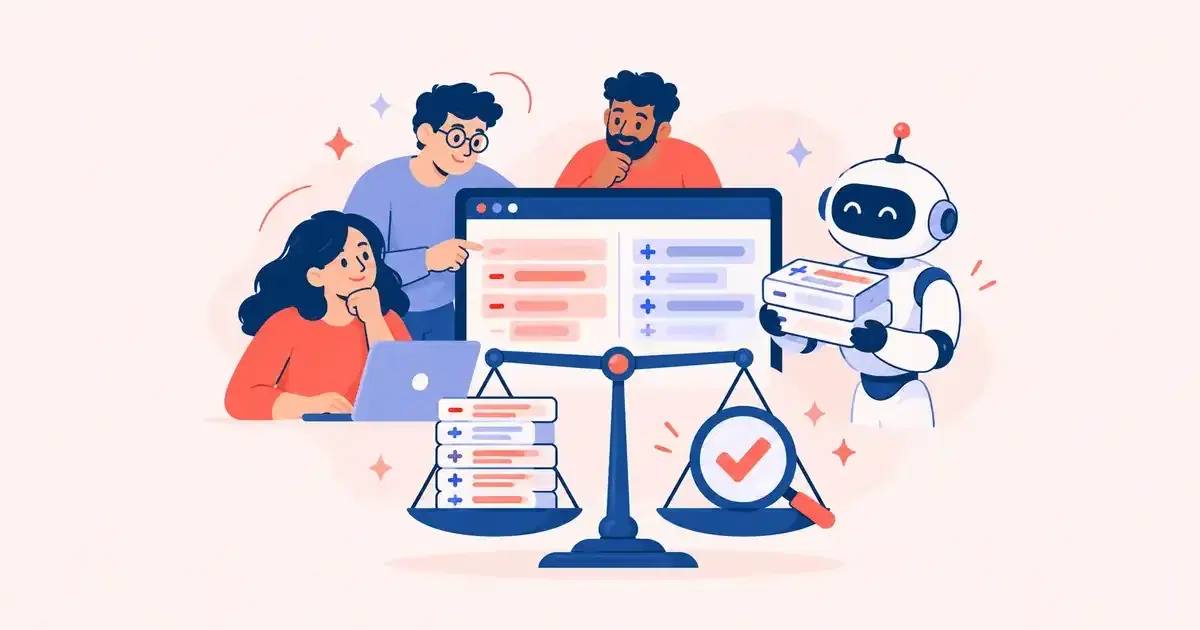
Balance faster time-to-market against lasting control over compliance and data ownership
4. Make Privacy and Compliance Foundational
Few categories of software process data as sensitive as the academic histories and behavioral patterns of minors. In the United States, teams must account for FERPA from the outset and COPPA when users are under 13. Compliance cannot be retrofitted after a successful pilot. Organizations beyond the U.S. must additionally satisfy GDPR or comparable rules.
Collect only the information the learning model truly requires to operate
Show schools and parents plainly which data is gathered and how the product uses it
5. Test, Refine, and Expand in Stages
Begin in one classroom or with a limited cohort before broadening deployment
During the pilot, pair the AI system with educator judgment instead of eliminating review altogether
Frequent Challenges When Developing AI-Powered Learning Apps
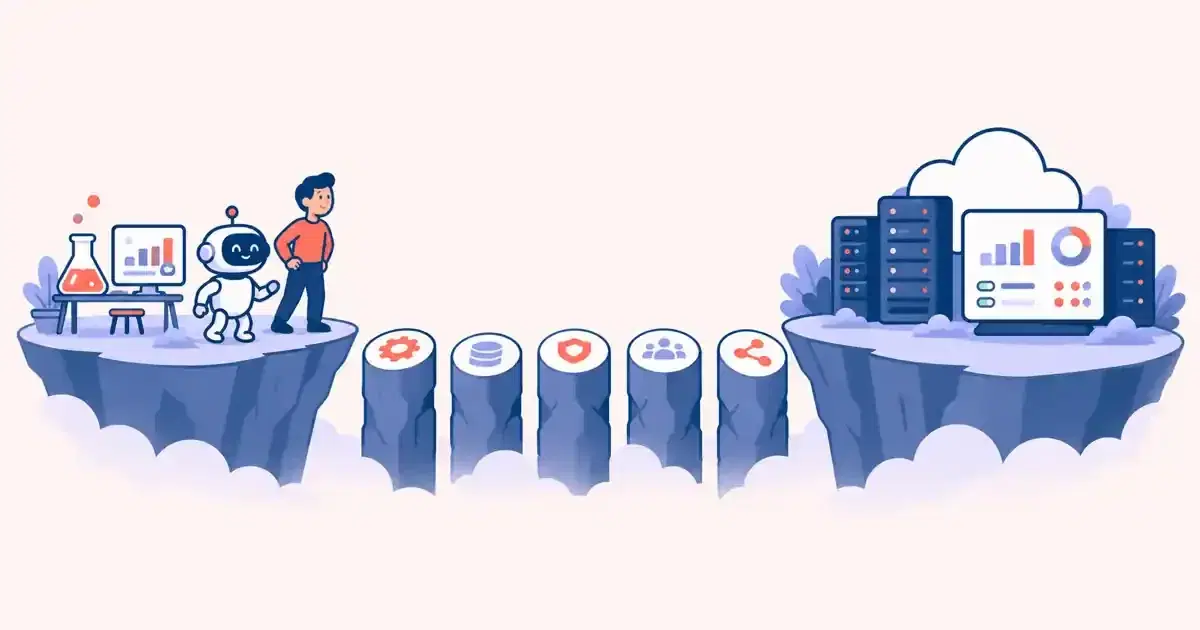
When AI education products stall during a pilot, model quality is rarely the main cause. More often, the failure comes from gaps in governance and trust that become visible only once the product enters real classrooms.
The data make the gap clear, and progress toward closing it remains slow. According to UNESCO's 2023 worldwide survey of universities and schools, fewer than 10% had established formal institutional rules for generative AI use (UNESCO, 2023).
A later 2025 survey of U.S. K-12 educators showed that the domestic number had increased: 45% of principals said their school or district now had some form of AI policy. Guidance still trails adoption. Formal AI training for students is offered by only 35% of district leaders, while more than 80% of students report that no teacher has directly explained how they should use AI for schoolwork (RAND Corporation, "AI Use in Schools Is Quickly Increasing but Guidance Lags Behind," 2025).
Oversight continues to lag behind use. Roughly seven in ten teens say they have experimented with a generative AI product (Common Sense Media, 2024). About six in ten K-12 educators use AI tools at some point in the school year, although only about a third do so every week (Gallup and Walton Family Foundation, 2025). A product built without accounting for this gap inherits the same governance risk as the school deploying it.
Inadequate privacy design: Make FERPA/COPPA compliance a prerequisite for launch rather than a correction after release
Algorithmic bias within recommendations or grading: Evaluate models across diverse student groups and provide a clear route to human review
Excessive automation of high-stakes choices: Use end-to-end automation only for low-stakes practice and send anything that affects a transcript to a person for review
Final Thoughts
When designed effectively, an AI-powered learning app becomes much more than a chatbot attached to a course catalog. Its accuracy improves with continued use because every assessed answer and tutoring exchange sharpens its understanding of recurring misconceptions. Success depends less on the particular foundation model selected than on the design and integration of the learner model, content pipeline, and compliance layer. A gradual rollout that develops confidence among students and educators matters just as much.
Most AI pilots stall before production. The five gaps behind it (data, evals, ownership, operations, workflow), sourced figures and a pre-pilot checklist.