How Much Does It Cost to Integrate AI into Existing Software in 2026?
Are you thinking about how much AI integration really costs in 2026? This guide explains pricing, cost factors, and real-world estimates to help you plan your AI software integration with confidence.
By Tart Labs·Published
Want to start a Project?
share
share
Introduction
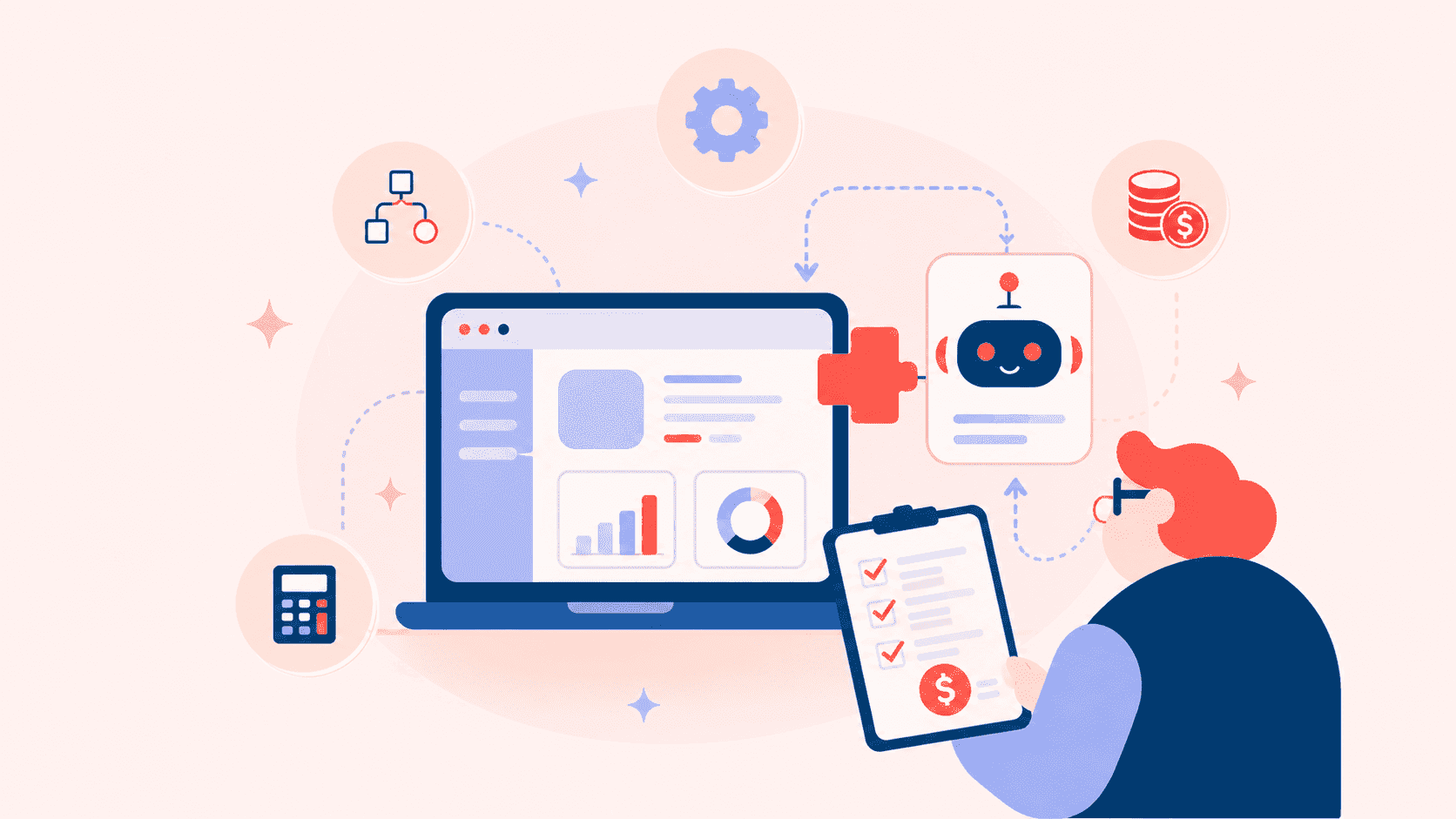
Are you thinking Artificial Intelligence (AI) is still an option for your business? Never. In 2026, AI is not an optional technology; it's an essential part of business. Businesses are enhancing their existing applications with AI to minimize routine tasks and help teams choose better actions based on data. Instead of replacing their current systems, businesses are enhancing them with AI to stay competitive.
There will be one question that remains at the top of every business leader's mind: How much does it cost to integrate AI into existing software? The truth is that it depends on several factors, including the complexity of your current software, the type of AI solution you want to implement, the quality of your data, integration requirements, and your long-term business objectives.
Read this complete guide and understand everything you need to know about the cost to integrate AI into existing software in 2026. Whether you're planning your first AI project or evaluating a top AI app development company, this guide will help you estimate costs, avoid common mistakes, and make informed decisions.
What Does AI Integration Mean?
AI integration allows businesses to add intelligent features to their current software without rebuilding the entire application from scratch.
Instead of replacing your current system, AI works alongside it to make your software smarter, faster, and more efficient. By integrating AI, businesses provide intelligent recommendations, make accurate predictions, and assist users in real time.
Whether you're using an Enterprise Resource Planning (ERP) system or a Customer Relationship Management (CRM) system, or operating in industries like Healthcare, Fintech, Education, Finance and Banking, or Manufacturing, you don’t need to replicate your current software. An AI layer can be seamlessly included in your system, enhancing capabilities without disrupting your existing workflow. Businesses choose an AI app development company or an AI software development company to add custom AI development, OpenAI API integration, and enterprise AI solutions for their existing software.
The cost to develop or integrate AI into existing software depends on the type of AI solution your business chooses. Every AI application is designed to solve a different business challenge, and each comes with its own level of complexity, customization, and implementation effort. For example, integrating a simple AI chatbot requires significantly less development than building an AI-powered enterprise agent capable of automating complex workflows across multiple business systems.
Frequently Asked Questions (FAQ)
Several factors influence the AI implementation cost and overall AI integration pricing. The complexity of your existing software is one of the biggest factors, as modern applications are usually easier to integrate than outdated systems. Other important factors include data quality, the AI model you choose, API integrations, security requirements, cloud infrastructure, scalability, and ongoing maintenance. Projects that require more customization, multiple system integrations, or advanced AI capabilities generally have higher implementation costs.
Let's connect and create something amazing together!
Got an idea or project in mind? Whether it's custom software, a dedicated dev team, or help with digital transformation, we're here for it. Reach out—we'll bring your vision to life.
Contact us
Prefer to speak directly? You’ll find our address, email, and contact details right here.
Office Location
Block A1 Third Floor, Rathinam TechZone, SEZ Campus Pollachi Main Road, Eachanari, Coimbatore, Tamil Nadu 641021, India
Thinking through a new idea or stuck with a challenge? Drop us a message—we'll listen, brainstorm, and help move things forward.
Before estimating your AI integration cost, it's important to understand the most common AI solutions businesses implement, where they're typically used, and the value they deliver. This helps organizations choose the right AI solution that matches their current systems, project scope, and investment plans.
Conversational AI
Interact with software through natural language using chat or voice with the help of Conversational AI. It understands user intent and delivers human-like responses in real time. Used in customer support systems, virtual assistants, and business communication tools to reduce manual effort and improve response speed.
Purpose
Help businesses respond to customer and employee queries quickly through intelligent chat and voice interactions.
Business Benefits
24/7 customer support
Faster response time
Lower support costs
Improved customer experience
Efficient lead handling
Generative AI & LLM Solutions
Create text, code, and get intelligent responses using advanced AI systems like Generative AI and LLM solutions. It supports enterprise search, content generation, coding assistance, and knowledge-based automation.
Purpose
Generate content, answer, and intelligent outputs to support knowledge-based business operations.
Business Benefits
Faster content creation
Improved productivity
Better decision support
Reduced manual effort
Smarter knowledge access
Generative Media AI
Generative Media AI creates digital content such as images, videos, voice, and avatars using AI models. It is widely used in marketing, advertising, product design, and training content creation, thus businesses can produce high-quality media at scale with less effort.
Purpose
Create visual and audio content for marketing, training, and communication.
Business Benefits
Lower content cost
Faster marketing output
Better engagement
Scalable creative production
Reduced design workload
Intelligent Document Processing
Use AI to read, extract, classify, and process information from structured and unstructured documents such as invoices, contracts, and forms. Intelligent document processing helps businesses handle invoices, contracts, and forms faster by extracting and organizing information automatically.
Purpose
Extract and process information from business documents with minimal manual effort.
Business Benefits
Reduced manual data entry
Higher accuracy
Faster processing
Lower operational cost
Better compliance
Intelligent Automation
Intelligent Automation uses AI to simplify business operations to perform repetitive and decision-based tasks with minimum manual effort. It can make decisions, execute tasks, and manage end-to-end workflows across departments like finance, HR, and operations.
Purpose
Enable AI to manage routine activities, speed up task completion, and simplify business operations.
Business Benefits
Improved productivity
Fewer human errors
Faster workflows
Reduced operational effort
Better process efficiency
Predictive Intelligence
Analyze business information with AI to identify possible trends and help teams make better planning decisions. Predictive Intelligence helps teams take timely actions based on insights instead of reacting after situations change.
Purpose
Predictive Intelligence uses AI to study business information, recognize meaningful patterns, and provide insights that support future planning.
Business Benefits
Better forecasting
Reduced risk
Improved planning
Higher customer retention
Smarter decisions
Vision AI
Allow AI to process photos and video feeds, recognize important details, and generate useful insights. It is used for object detection, quality inspection, surveillance, and real-time monitoring in various industries.
Purpose
Analyze visual data for inspection, recognition, and tracking.
Business Benefits
Better quality control
Improved safety monitoring
Faster inspections
Reduced manual effort
Higher accuracy
Data & AI Engineering
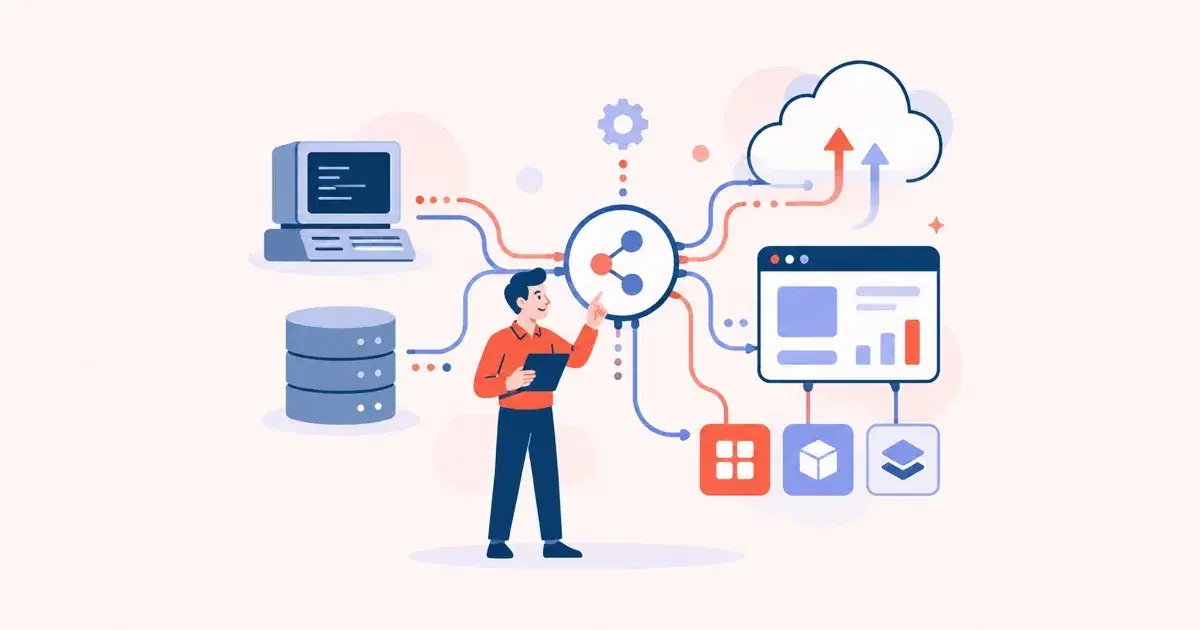
Build and manage the infrastructure required for AI systems, including data pipelines, model deployment, and integration frameworks with Data and AI Engineering. It ensures that AI applications run smoothly, securely, and at scale.
Purpose
Support AI systems with strong data flow and scalable architecture.
Business Benefits
Smooth AI integration
Better data quality
Scalable systems
Faster deployment
Reliable performance
Industry AI Solutions
Provide custom AI applications that address industry-specific requirements and operational challenges. Industry AI solutions address industry-specific challenges and support digital transformation through intelligent automation and decision-making systems.
Purpose
Solve industry-specific problems using AI.
Business Benefits
Improved efficiency
Better decision-making
Industry-focused automation
Digital transformation support
Higher competitiveness
AI Integration Cost Comparison
The figures below are approximate and may vary depending on customization requirements, software complexity, third-party integrations, data availability, security requirements, and business objectives.
Service Category
Solutions
Use Cases
Typical Project Range (USD)
Timeline
Conversational AI
AI Chatbots, Voice AI, Virtual Assistants
Customer support, Employee helpdesk, Lead qualification
$5,000 to $25,000
2 to 8 weeks
Generative AI & LLM Solutions
AI Copilots, AI Agents, RAG / Enterprise Search, Custom LLM Applications
Enterprise knowledge assistants, Content generation, Coding assistants, Research automation
$10,000 to $80,000
1 to 4 months
Generative Media AI
Image Generation, Video Generation, AI Avatars, Text-to-Speech, Speech-to-Text
Marketing creatives, Product mockups, Training videos, Social media content, Virtual presenters
AI Integration, Data Pipelines, MLOps, AI Infrastructure
ERP/CRM integration, Model deployment, AI platform engineering
$15,000 to $120,000
2 to 6 months
Industry AI Solutions
Manufacturing AI, Retail AI, Healthcare AI, Finance AI, Logistics AI
Industry-specific AI applications, Digital transformation
$20,000 to $250,000+
3 to 9 months
How to Reduce AI Integration Costs
AI investment is powerful, but it doesn’t have to be expensive. Make smart technical and strategic decisions early in the process, so you can avoid unnecessary costs. Let’s explore practical ways to reduce AI integration costs.
Start with MVP
One of the smartest ways to save costs in AI integration is to start with a Minimum Viable Product(MVP). Businesses don't have to launch a complete AI solution in the first phase. A better approach is to start with a smaller solution that addresses one important business challenge.
With this approach, you can validate the idea quickly, reduce initial investment, and allow teams to gather real user feedback before scaling further. When the MVP delivers good results, new AI features can be added gradually without affecting the current system setup.
Building a new AI model requires more time and skilled AI professionals. Instead, businesses can use pre-trained large language models (LLMs) like OpenAI, Claude, or Gemini to reduce development effort and cost.
Businesses can access these ready-to-use AI models through an API. No need for heavy infrastructure, training costs get reduced, and implementation speeds up.
Reuse Existing APIs
Another effective cost-saving strategy is to reuse existing APIs instead of developing custom AI components. Many AI capabilities, such as text generation, speech recognition, translation, and image processing, are already available through ready-made services.
By integrating these APIs into your existing software, you can avoid building complex systems from scratch while still delivering powerful AI features to users.
Choose Scalable Cloud Infrastructure
With cloud infrastructure, businesses can save more on AI costs, mainly for computing power and storage. Costs depend on how much cloud capacity a business consumes during its operations.
Cloud infrastructure prevents unnecessary costs during low usage periods and supports smooth scaling as the application grows.
Don’t try to deploy AI across all systems at once, as it can quickly increase costs and complexity. Introducing AI step by step helps lower expenses and keeps the process well organized.
Businesses should prioritize high-impact areas first, such as customer support or automation workflows, and gradually expand AI capabilities over time.
Monitor Token Usage
For businesses using LLM APIs, token usage directly impacts cost. Without proper monitoring, expenses can increase quickly, especially in high-traffic applications.
Track token consumption, set usage limits, and optimise responses to control operational costs. Reduce unnecessary API calls or shorten output to make a big difference in long-term spending.
Focus on High-ROI Workflows
Not every business process requires AI integration. To control costs, businesses should focus on AI use cases that bring the most measurable value.
Focus on areas such as customer support automation, document processing, sales assistance, and repetitive operational tasks. These ensure AI investment delivers real business results instead of unnecessary complexity.
Conclusion
Do you want to upgrade your software with AI capabilities? Tart Labs can help. As an experienced AI software development company, we provide AI integration services, custom AI development, AI consulting services, OpenAI API integration, enterprise AI solutions, and AI-powered software development tailored to your business requirements.
Have an AI idea or need expert guidance on your project? Contact us today. Our AI experts will understand your business needs, recommend the right AI solution, and provide a transparent estimate based on your goals, budget, and timeline.