


Introduction
Compared to past decades, the amount of money flowing through digital payment systems has increased rapidly. Do you know what caused such a massive growth in the fintech industry? The answer is the evolution of digital technology and modern software solutions. Earlier, banking systems mostly depended on manual operations, which made financial transactions slow and time-consuming.
Today, fintech platforms have completely changed the way people handle banking and payments. To handle millions of daily transactions, modern fintech architecture uses technologies such as cloud computing, APIs, payment gateways, databases, and advanced security systems. The rise of fintech app development has also helped a lot in this change.
The growth of payment systems like UPI has further increased the demand in the fintech industry. A single digital platform can manage investments, pay bills, and transfer money. These digital payment systems provide fast and secure financial experiences for users.
Let’s explore fintech architecture, real-time payment systems, scalable infrastructure models, and modern technologies in this blog. Understand how fintech platforms deliver fast and secure digital payment experiences efficiently.
What Are Real-Time Payment Systems in Fintech Architecture?
Real-time payment systems allow money to be transferred instantly between users and organizations. Let’s explore how it works, the differences between traditional and modern payment systems, and the benefits they offer.
How Real-Time Payments Work
Payment Initiation
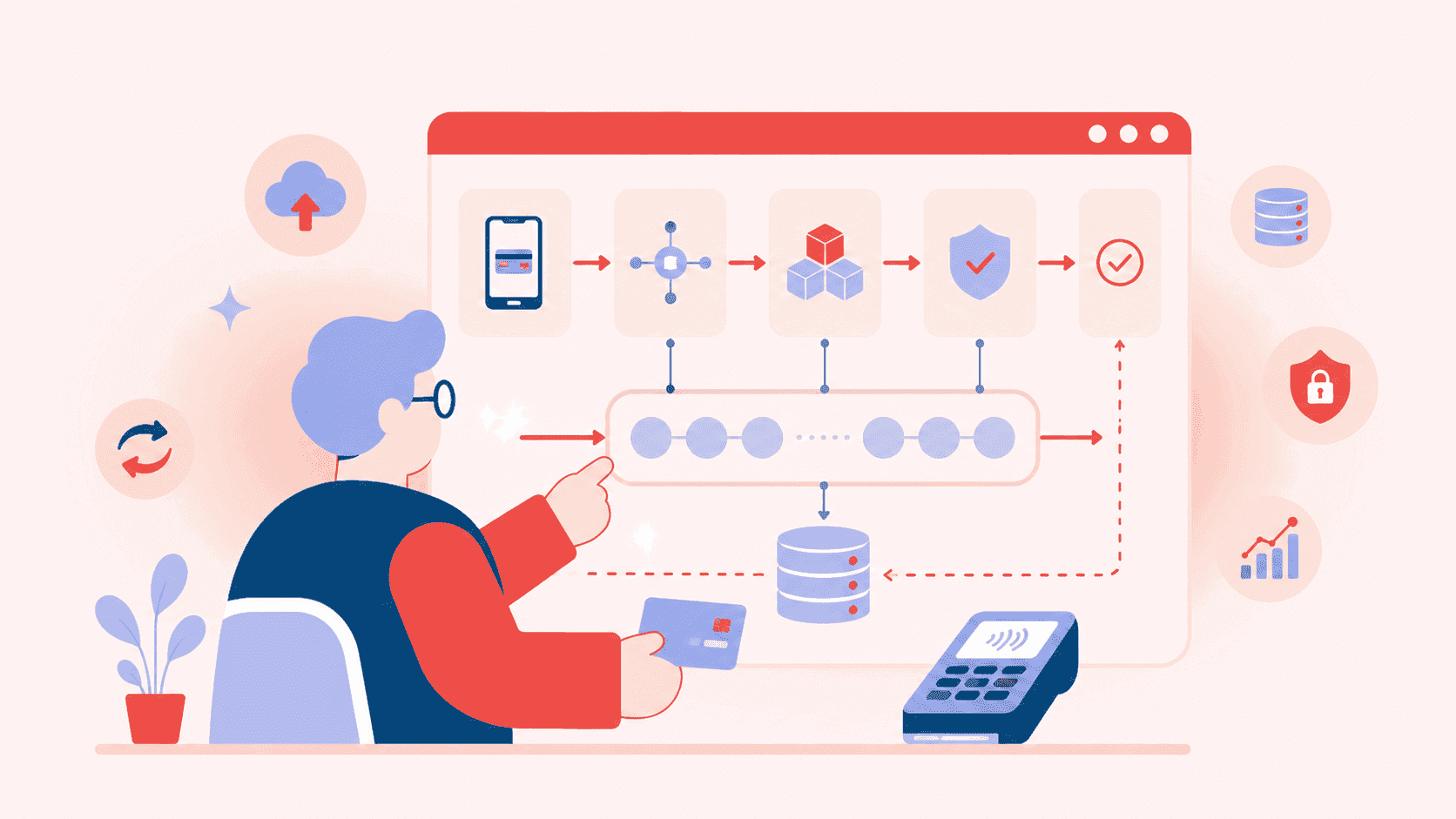
The Real-Time Payment (RTP) process starts when the user initiates a transaction through a digital payment platform such as a mobile banking application, an online platform, or a digital wallet. After entering the payment details, the system verifies the user using authentication methods such as OTP verification, passwords, or biometric authentication to ensure secure transaction processing. In many cases, modern custom software development helps build these secure and scalable payment flows.
API and Payment Gateway Processing
Once the payment request is created, APIs and payment gateways communicate between fintech applications, banks, and financial networks. The payment gateway validates the transaction details and securely routes the payment request to the appropriate banking system for further processing.
Verification and Fraud Detection
Before completing the transaction, the system performs multiple security checks to verify payment authenticity. AI-based fraud detection systems keep tracking risky transaction patterns in real time, while encryption technologies help protect sensitive financial information during digital transaction processing.
Transaction Settlement
After successful verification, the sender’s bank approves the transaction and transfers the funds instantly to the receiver’s bank account. Real-time payment systems are designed to complete this settlement process within seconds without delays. Modern fintech infrastructures use low-latency processing, banking synchronization, and API-driven communication to ensure secure and seamless transaction settlement.
Notification and Confirmation
After a payment is completed, both sender and receiver get instant alerts through mobile apps, SMS, or email notifications. These confirmations help users track transaction status in real time and improve transparency, reliability, and customer trust in digital payment systems.
Also Read: How to Develop a Fintech App in 2026: A Complete Guide for Startups & Enterprises
Difference Between Traditional and Real-Time Payments
Traditional Payments
Traditional payments work on the banking hours, which can delay transaction completion for several hours or even days. It depends on legacy banking infrastructure and manual verification processes.
Real-Time Payments
Instant payments work without banking-hour restrictions, and can make transactions anytime. They use modern fintech technologies such as APIs, cloud infrastructure, and automated processing systems to deliver faster digital payment experiences.
| Feature | Traditional Payments | Real-Time Payments |
|---|---|---|
| Transaction Speed | Takes hours or days to process | Completed within seconds |
| Processing Method | Batch-based processing | Real-time transaction processing |
| Availability | Limited to banking hours | Available 24/7 without interruption |
| Infrastructure | Legacy centralized banking systems | Cloud-native and distributed architecture |
| Payment Confirmation | Delayed transaction updates | Instant payment notifications |
| Scalability | Limited transaction handling capacity | Highly scalable fintech infrastructure |
| User Experience | Slower and less flexible | Faster and seamless payment experience |
| Security | Basic fraud monitoring | AI-powered fraud detection and encryption |
| System Communication | Limited banking integrations | API-driven real-time communication |
| Operational Efficiency | More manual processing involved | Automated and efficient workflows |
Benefits of Real-Time Transaction Processing
Faster payments with zero waiting time
Real-time payment systems help users transfer money within seconds without long processing periods. Customers and businesses no longer need to wait for banking hours, which makes digital payments faster, easier, and more convenient in everyday financial activities.
Improved customer payment experience
Instant payment confirmation and quick transaction updates create a smooth customer experience. Users receive better convenience, easy access to digital payments, and reliable financial services, which increases trust and satisfaction in modern fintech platforms and digital banking applications supported by payment processing systems.
Better liquidity management
Businesses receive payments immediately through real-time transaction systems, which helps maintain better control over cash flow and financial operations. Faster access to funds also supports quick business decisions and improves overall financial stability for organizations and merchants using payment gateway architecture.
Reduced transaction processing delays
Traditional payment systems often require several hours or days to complete transactions. Real-time payment infrastructure removes unnecessary delays by processing transactions instantly, which improves operational efficiency and supports faster financial communication between banks, businesses, and customers.
Safer and secure digital transactions
Modern fintech systems use encryption technologies, authentication methods, and secure payment infrastructure to protect sensitive financial information. These security measures help users perform online transactions safely while reducing risks related to unauthorized access and digital payment fraud.
Smarter fraud detection systems
Advanced fintech platforms use AI-based fraud detection systems to identify unusual transaction activities instantly. Real-time monitoring tools help financial institutions take quick action against suspicious transactions and improve overall payment security across digital financial networks.
New business opportunities through instant payments
Real-time payment technologies help businesses provide faster services and modern digital payment options for customers. This creates new opportunities for online businesses, fintech startups, e-commerce platforms, and digital financial service providers in competitive global markets. It also increases demand for web app development in building scalable financial solutions.
Scalable infrastructure for growing payment demands
Modern fintech architecture supports millions of transactions without affecting system performance. Cloud computing, APIs, and distributed systems help payment platforms expand services efficiently while maintaining speed, reliability, and seamless transaction experiences for growing customer demands.
Core Components of a Fintech Payment System
Modern fintech payment systems rely on multiple technologies and connected services to process digital transactions quickly and securely.
User Interface and Frontend Applications
The frontend layer helps users interact with fintech platforms through mobile banking apps, payment applications, web platforms, and digital wallets. It allows customers to transfer money, manage accounts, and track transactions easily while providing a smooth and user-friendly digital payment experience.
Main functions:
- Payment initiation
- Account management
- Transaction tracking
- User dashboard access
Payment Gateway Systems
Transfer payment information securely between customers, businesses, and banks with payment gateway systems. They verify payment requests, approve transactions, and send payment data to banking systems safely, which helps online payments happen quickly and smoothly without interruptions.
Key responsibilities:
- Payment authorization
- Merchant connectivity
- Secure transaction routing
- Financial data transmission
Also Read: What is Data Engineering? A Beginner’s Guide for Businesses.
API Integration Layer
APIs help fintech platforms connect with banks, payment systems, and other third-party financial tools and services. They support smooth data sharing and real-time communication, which allows fintech companies to expand digital payment services quickly and provide better connectivity across financial networks.
Benefits of APIs:
- Faster banking integration
- Real-time communication
- Flexible service expansion
- Smooth financial connectivity
Core Banking Infrastructure
Core banking systems manage important financial activities such as account handling, balance checks, customer records, and transaction processing. These systems help fintech platforms maintain accurate financial data and ensure smooth payment operations across banking networks and digital payment systems.
Core operations include:
- Customer account management
- Transaction record maintenance
- Balance validation
- Financial data processing
Transaction Processing Engine
In fintech platforms, the transaction processing engine handles the complete payment flow from verification to successful money transfer. It helps process transactions quickly, reduces delays, and supports smooth financial operations even during high transaction volumes.
Important capabilities:
- Real-time payment execution
- Transaction validation
- Fast request processing
- Load distribution management
Databases and Data Storage Systems
Databases help fintech platforms store customer information, payment records, and transaction history securely. Modern storage systems support quick data access, better reliability, and smooth transaction management while handling large amounts of financial data every day.
Database functions:
- Secure financial data storage
- Transaction history management
- Quick data retrieval
- Scalable storage support
Security and Fraud Detection Systems
In modern fintech systems, protecting digital payments and user data is very important. Security systems use tools like encryption, multi-factor login, and live fraud checks to keep transactions safe and quickly detect any unusual or suspicious activity.
Security features include:
- Data encryption
- Multi-factor authentication
- AI fraud monitoring
- Secure payment verification
Also Read: Best Data Engineering Services for Digital Business
Cloud Infrastructure and Scalability
For fintech platforms, cloud infrastructure plays a key role in keeping payment systems flexible and reliable. It ensures smooth handling of transactions, supports high traffic without slowing down, and provides quick recovery options so services continue running without any interruption. This forms an important part of scalable fintech architecture.
Cloud infrastructure advantages:
- Flexible scalability
- High system availability
- Efficient resource allocation
- Reliable disaster recovery support
Also Read: What is Cloud Application Development? A Complete Guide
Notification and Communication Systems
In fintech applications, notification systems keep users informed about every transaction. SMS, push alerts, and emails send instant updates that build trust, improve transparency, and help customers check their payment status in real time while using digital financial services.
Communication services include:
- Instant payment alerts
- Transaction confirmations
- Account activity updates
- Customer notifications
Analytics and Monitoring Systems
Fintech platforms rely on monitoring systems to check how the application performs, how payments move, and how stable the system is. Analytics tools give clear insights into payment trends, system health, and failures, helping businesses improve efficiency and fix issues quickly.
Monitoring capabilities:
- System performance tracking
- Transaction analytics
- Failure detection
- Operational optimization
Compliance and Regulatory Management
To run fintech services safely, companies must follow financial rules and standards. Compliance systems take care of KYC verification, AML checks, PCI DSS requirements, and data protection policies, which help maintain trust, security, and clear financial operations across platforms.
Compliance processes include:
- KYC verification
- AML monitoring
- PCI DSS compliance
- Financial regulation management
Why Scalability Is Important in Fintech Systems
As more users start using digital platforms, the fintech system must handle a large number of transactions without slowing down. A scalable system from the best fintech software development company makes sure performance stays smooth even when demand increases.
Handling millions of transactions
Fintech platforms process millions of payments every day. Scalability helps systems manage this huge load by distributing traffic across servers and services. It ensures that money transfers, bill payments, and online purchases happen quickly and without delays, even during heavy usage in modern payment system architecture.
Challenges during peak traffic
During festivals, sales events, or salary days, transaction volume increases suddenly. A scalable fintech setup adjusts resources automatically to handle these peak situations and keeps services stable for users, which is a key part of scalable payment systems.
Ensuring high availability and reliability
Users expect payment services to work anytime without interruption. Scalability supports high availability by keeping systems active even if one part fails. It also improves reliability by making sure transactions are handled properly and without failure in each case.
Microservices Architecture for Scalable Payment Platforms
Modern fintech systems need to handle fast transactions, high traffic, and continuous user demand. To manage this effectively, many platforms now use a microservices setup instead of a single large monolithic system.
In a monolithic architecture, the entire application runs as a single unit. This means payment processing, user management, and other features are tightly connected. While this approach is simple at the start, it becomes difficult to scale and maintain when the system grows.
Do you know? Microservices architecture splits a system into smaller independent parts, where each part takes care of a specific task like payments, authentication, or notifications. These services work together but can run and update separately without affecting the entire system.
Key advantages for fintech platforms:
- Each service adjusts its resources based on its own demand.
- Faster development and updates without system downtime
- Easier fault handling since one issue does not stop the whole system
- Better performance during high transaction loads
- Flexible technology choices for different services
Event-Driven Architecture in Real-Time Payments
Understanding asynchronous communication
In asynchronous communication, different services do not wait for each other to complete tasks. One component sends a message, while a different component handles and processes it later. This helps scalable fintech solutions manage heavy traffic without slowing down real-time payment processing.
Message queues and event streaming
Message queues store events temporarily and deliver them when systems are ready. Event streaming allows a continuous flow of data between services. These methods improve scalability and stability in digital payment systems by reducing direct system dependency.
Cloud-Native Infrastructure for Fintech Applications
Modern digital finance platforms depend heavily on flexible and distributed systems to support fast and secure transactions. A cloud-based approach helps fintech systems handle growing user demand while keeping services stable and responsive.
Cloud computing in payment systems
Cloud technology allows fintech platforms to run services on scalable and distributed resources instead of fixed servers. It improves real-time payment systems by ensuring smooth processing, high availability, and better performance even during peak transaction loads. It also strengthens digital payment systems by reducing downtime risks.
Auto-scaling and load balancing
Auto-scaling increases or decreases system resources based on usage needs, while load balancing spreads incoming traffic across several servers to maintain smooth performance. These features support scalable fintech solutions by maintaining stable performance and smooth real-time payment processing even during high usage periods.
Security and Compliance in Real-Time Payment Systems
Security and compliance play a critical role in real-time payment systems because financial transactions involve sensitive user data and large money transfers. Every fintech platform must ensure strong protection while also following legal and regulatory rules to operate safely.
Modern systems use multiple security layers to protect digital payments. Encryption helps secure data during transfer, while multi-factor authentication adds extra user verification before transactions are approved. Fraud detection tools also monitor activity in real time and quickly identify unusual behavior to prevent financial loss.
From a compliance point of view, fintech companies must follow global and local financial regulations. Standards like KYC for user verification, AML for preventing illegal money flow, and PCI DSS for securing payment data help ensure safe handling of customer identity and financial information.
Core security layers:
- Data encryption for secure transactions
- Multi-factor authentication for user safety
- Real-time fraud monitoring systems
- KYC and AML verification rules
- PCI DSS compliance for payment security
Also Read: AI in How to Develop a Fintech App in 2026 - Steps and Cost
Future of Fintech Architecture
Fintech systems are moving toward a more intelligent, fast, and highly automated future. As digital payments continue to grow, new technologies are changing how financial platforms work, making them more secure, personalized, and efficient for users.
AI-driven payment systems
Artificial intelligence will play a much bigger role in future payment systems. It can help detect fraud quickly, predict user behaviour, and improve transaction decisions. AI also supports faster customer support and smarter financial recommendations based on user activity.
Also Read: How to Integrate AI Features into Your Existing Software
Blockchain in future payments
Blockchain technology can improve trust in digital transactions by storing records in a secure and transparent way. It reduces dependency on middle systems and helps create safer, tamper-proof payment networks for global transactions.
Hyper-personalized banking experiences
Future fintech platforms will focus more on personal user needs. Banking apps offer customized services, spending insights, and financial suggestions based on individual habits, making the experience more user-friendly and relevant.
Fully autonomous financial ecosystems
In the coming years, fintech systems will become highly automated, where payments, savings, investments, and approvals happen with minimal human effort. These systems will work continuously and make financial services fast for everyday users.
Also Read: Guide for AI-Powered Financial Advisor and Planning App Development
Conclusion
If you plan to build a fintech solution, focusing on a strong architecture is the right step. Tart Labs is a top fintech app development service provider that can help you design and build scalable digital payment systems. To discuss your idea or project, you can reach out to us and explore the right solutions that fit your needs.