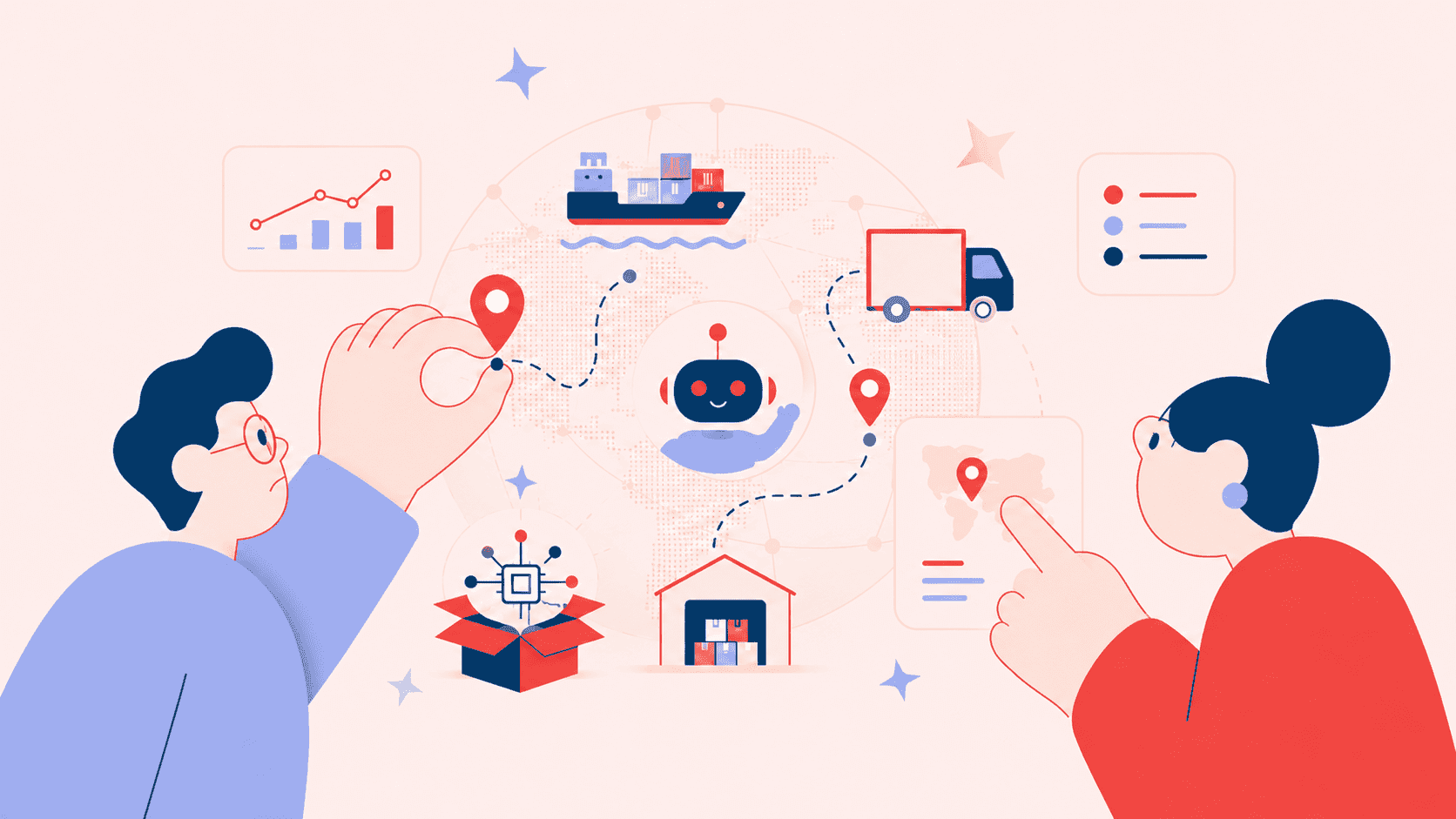
Next-Gen Logistics: Leveraging AI and Edge Computing for Real-Time Supply Chain Visibility
Are you finding it difficult to manage delays and a lack of visibility in your logistics operations? Discover how AI-powered logistics, smart supply chain technologies, and edge computing help improve overall supply chain efficiency in real time.
By Tart Labs·Published
Want to start a Project?
share
share
Introduction to Next-Gen Logistics
Delayed shipment in logistics is a small issue for the customer, but for businesses, it can affect operations, customer trust, and overall supply chain performance. Today, companies are expected to know exactly where products are, when they will arrive, and what problems could interrupt delivery. But is it easy with traditional logistics systems? Not anymore.
Modern supply chains handle massive amounts of data every second through warehouses, delivery vehicles, suppliers, ports, and tracking systems. Without real-time supply chain visibility, businesses struggle with delivery delays, inventory confusion, poor coordination, and slow decision-making. This demand increases the importance of Logistics Software Development for businesses that want to modernize supply chain operations.
To build a smarter and more connected supply chain, businesses are now turning toward AI and edge computing in logistics. These technologies help companies process information instantly, track shipments more accurately, automate operations, and respond quickly to unexpected disruptions.
Have you noticed how delivery updates today are quicker and more dependable? Behind that convenience is a growing shift toward AI-powered logistics, logistics automation, and intelligent supply chain systems. Combined with technologies like IoT sensors, GPS tracking, RFID, and digital monitoring tools, businesses are transforming the traditional supply chain into a highly responsive digital supply chain.
Understand Real-Time Supply Chain Visibility
What Supply Chain Visibility Means
Supply chain visibility refers to the ability to monitor products, inventory, shipments, and logistics operations across the entire supply chain. It helps businesses track what is happening at every stage, from warehouses to final delivery.
Do you know why this matters today? Customers and businesses both expect faster updates, accurate deliveries, and better operational control.
What Real-Time Visibility Means
Traditional supply chain management often depends on manual updates and delayed reporting. As a result, response times increase and delivery problems can occur.
Why Traditional Visibility Methods Are No Longer Enough
Older logistics systems cannot handle the speed and complexity of modern supply chains. Delayed information can lead to:
Delivery delays
Frequently Asked Questions (FAQ)
The cost of implementing AI in logistics depends on factors such as business goals, automation capabilities, and overall project complexity. Some businesses may need basic logistics automation, while others may require advanced AI-powered platforms with real-time supply chain visibility and predictive analytics features.
To get a more accurate estimate based on your logistics operations and business requirements, connect with our team for a personalized consultation and project discussion.
Let's connect and create something amazing together!
Got an idea or project in mind? Whether it's custom software, a dedicated dev team, or help with digital transformation, we're here for it. Reach out—we'll bring your vision to life.
Contact us
Prefer to speak directly? You’ll find our address, email, and contact details right here.
Office Location
Block A1 Third Floor, Rathinam TechZone, SEZ Campus Pollachi Main Road, Eachanari, Coimbatore, Tamil Nadu 641021, India
Thinking through a new idea or stuck with a challenge? Drop us a message—we'll listen, brainstorm, and help move things forward.
Inventory shortages
Poor coordination
Increased operational costs
Customer dissatisfaction
How Real-Time Visibility Improves Logistics Operations
Real-time logistics monitoring helps businesses:
Improve shipment tracking accuracy
Reduce inventory issues
Respond quickly to disruptions
Improve delivery performance
Support faster decision-making
Build a smarter digital supply chain
Explore AI in Modern Logistics
What is the reason behind AI’s growing use in logistics? It is that supply chains generate massive amounts of data, and managing that data manually is no longer practical. Businesses need systems that can quickly analyze information, identify patterns, and respond to problems before they affect operations.
Artificial Intelligence (AI) in logistics helps organizations improve efficiency by automating routine work and minimizing manual mistakes. Instead of depending only on manual processes, businesses can now use AI-powered systems to monitor operations in real time and improve overall supply chain performance.
Some common areas where AI-powered logistics is making a difference include:
Route optimization for faster deliveries
Predictive maintenance for fleet management
Smart warehouse automation
Inventory demand forecasting
Real-time shipment monitoring
Delivery schedule optimization
Discover Edge Computing in Logistics
Modern logistics systems generate massive amounts of operational data every second through IoT devices, fleet systems, warehouses, and shipment tracking networks. But what happens when all this data depends only on central cloud-based systems? Processing delays can occur, which affects real-time delivery tracking and overall logistics efficiency.
To overcome this, businesses move towards edge computing in logistics. How are delivery updates becoming more accurate and responsive? Edge computing works by handling and analyzing data near the place where it is produced, rather than transferring everything to cloud servers. Thus, logistics companies access faster information and improve real-time supply chain visibility across connected logistics networks.
Edge computing also supports smart logistics technologies, like:
Connect AI and Edge Computing for Supply Chain Visibility
Instead of working separately, businesses need both intelligent decision-making and faster data processing to maintain real-time visibility across modern supply chains. But why do AI and edge computing in supply chain management work more effectively when used together?
AI in logistics helps organizations analyze operational data, identify patterns, predict disruptions, and automate decisions. However, relying only on AI can sometimes create delays because large amounts of logistics data still need to travel to centralized cloud systems for processing.
Meanwhile, edge computing handles data closer to warehouses, vehicles, shipment tracking systems, and connected logistics devices. This reduces latency and improves response times. But without AI, edge devices can only process and transfer information without providing deeper analysis or intelligent recommendations.
When AI and edge computing work together, businesses gain faster insights and smarter operational control across the supply chain.
Know the Technologies Behind Smart Supply Chains
Instead of relying on a single system, businesses now use multiple smart logistics technologies to collect, process, analyze, and share data in real time across the digital supply chain.
IoT Devices
Internet of Things (IoT) in supply chain management helps businesses collect real-time operational data from logistics environments such as warehouses, delivery vehicles, and shipment systems.
RFID technology helps businesses identify and track products automatically through wireless signals. Compared to manual barcode scanning, RFID systems improve speed and tracking accuracy.
RFID systems help with:
Faster inventory tracking
Improved product identification
Better warehouse management
Reduced tracking errors
GPS Tracking
GPS tracking helps logistics companies keep a live view of vehicle and shipment movements as they happen. This improves fleet visibility and allows businesses to react faster when delays happen or when delivery routes need to be changed.
GPS technology supports:
Real-time shipment tracking
Fleet monitoring
Delivery route optimization
Improved transportation visibility
5G Connectivity
5G connectivity enables faster communication between connected logistics systems and smart devices. It helps businesses transfer operational data quickly with lower latency.
Benefits of 5G in logistics include:
Faster data transmission
Improved device connectivity
Better real-time communication
Support for connected supply chain operations
Digital Twins
Digital twins build digital replicas of supply chain operations, warehouses, or logistics systems. Businesses use them to monitor operations, analyze performance, and identify potential disruptions.
Digital twins help organizations:
Improve operational planning
Monitor logistics performance
Identify supply chain risks
Support data-driven decision-making
AI and Edge Computing
How to Improve Shipment Tracking and Fleet Visibility
More than delivery delays, a lack of real-time visibility into shipments and vehicles can affect customer trust and overall logistics performance. Today, customers expect accurate delivery updates and faster responses whenever disruptions occur.
Traditional tracking systems provide delayed updates, making it harder for logistics teams to respond quickly to traffic disruptions, route changes, or vehicle breakdowns. This is why businesses are now adopting real-time shipment tracking solutions, AI-powered fleet management systems, and Transportation Management System (TMS) platforms.
With technologies like GPS tracking, IoT-enabled sensors, connected vehicles, and mobile apps, organizations can continuously monitor shipment movement and transportation activities across the smart supply chain.
Real-time shipment tracking helps businesses:
Monitor delivery progress instantly
Improve shipment visibility
Detect delays faster
Provide accurate delivery updates
Fleet visibility also gives logistics teams better control over transportation operations by helping them monitor:
Vehicle locations
Driver activity
Fuel consumption
Vehicle health and maintenance
Optimize Warehouse and Inventory Operations
What happens when businesses fail to manage warehouse operations properly? Customers won’t receive products on time, inventory records become inaccurate, operational costs increase, and customer trust slowly starts to decline. In some cases, businesses struggle to survive because they cannot meet growing customer expectations.
To overcome this, organizations are adopting smart Warehouse Management System (WMS) powered by AI. Instead of depending only on manual processes, businesses now use real-time inventory visibility tools to monitor stock movement and improve warehouse efficiency across the digital supply chain.
AI-based inventory management helps organizations forecast demand, optimize stock levels, and predict replenishment needs before shortages occur. Warehouse automation using AI now supports robotic sorting, automated inventory scanning, and smarter order fulfilment processes. It improves logistics automation while reducing manual workload and inventory waste.
Modern logistics businesses use ERP in logistics to manage inventory, warehouse operations, procurement, and order processing from a centralized system. At the same time, CRM for logistics helps companies improve customer communication, delivery coordination, and service management across the supply chain.
Use Predictive Analytics for Supply Chain Planning
Modern supply chains generate huge amounts of operational data every day. But how do businesses use this data to prepare for future demand? Predictive analytics in logistics helps organizations analyze historical data, real-time operational information, and AI-driven insights to forecast future trends and improve supply chain planning.
With predictive analytics, businesses can estimate customer demand more accurately, optimize inventory planning, and avoid stock shortages or overstocking issues. It improves supply chain optimization and maintains better operational efficiency across the smart supply chain.
In risk management, AI helps businesses identify possible transportation delays, equipment failures, seasonal demand fluctuations, and supply chain disruptions before they occur.
Enhance Last-Mile Delivery with AI and Edge Computing
Last-mile delivery is often the most toughet parts of logistics operations. Traffic congestion, delivery delays, route inefficiencies, and changing customer expectations make delivery management more difficult than ever.
To improve last-mile delivery optimization, businesses use edge AI for logistics operations to create efficient delivery processes. AI in logistics helps companies study road traffic, weather changes, and delivery timings to plan better routes and improve dispatch decisions. Meanwhile, edge computing processes delivery and fleet data instantly from connected logistics systems. It allows drivers and fleet managers to make faster operational decisions and adjust delivery routes in real time whenever unexpected situations occur.
Create Smarter and More Resilient Logistics Networks
Modern logistics networks are no longer focused only on transporting goods between different places. Today, businesses need a smart supply chain capable of adapting and responding faster to changing customer demands. But what makes this level of resilience possible? It is the combination of connected digital technologies operating in coordination throughout the supply chain.
AI-powered logistics helps businesses make better choices by using live data and pattern-based predictions. Edge computing supports faster operational responses by processing data instantly across connected logistics networks. At the same time, IoT devices improve real-time supply chain visibility, while predictive analytics in logistics helps organizations identify risks before they affect operations.
As supply chains continue to become more data-driven, logistics automation and smart logistics technologies are helping businesses improve supply chain optimization, reduce operational costs, and enhance customer service. Partnering with the best logistics software development company helps you build scalable and intelligent supply chain solutions tailored to modern business demands.
Do you want to upgrade or build next-gen logistics solutions with AI and edge computing for real-time supply chain visibility? Partner with a top logistics software development company to create smarter, faster, and more resilient supply chain systems tailored to your business needs. Contact us today to transform your logistics operations with intelligent digital solutions.