Supply Chain Software Development: Cost and Features
Do you want to understand how supply chain software is built and what it costs? Learn about development factors, key features, and pricing insights to plan your supply chain solution better.
By Tart Labs·Published
Want to start a Project?
share
share
Introduction to Supply Chain Software Development
Managing the supply chain is a challenging process. Businesses need to handle inventory, coordinate with suppliers, manage warehouses, track shipments, and meet growing customer expectations, all while keeping costs under control. When these processes rely on manual methods or outdated systems, businesses often face inventory errors, delayed deliveries, poor communication with suppliers, and limited visibility into daily operations.
To solve this, businesses invest in supply chain software development. It helps businesses develop digital solutions to coordinate and enhance all areas of their supply chain activities. A supply chain management software solution brings inventory management, warehouse operations, logistics, transportation, and order fulfilment into a single platform. Depending on business needs, companies can choose an off-the-shelf solution or invest in custom supply chain software designed specifically for their workflows.
Modern supply chain software is powered by technologies like AI, Machine Learning to support smarter business decisions. These technologies help businesses improve demand forecasting, optimize inventory levels, track shipments in real time, and strengthen collaboration across the entire supply chain.
As businesses continue to focus on efficiency, scalability, and customer satisfaction, investing in supply chain management software has become a strategic decision. Understanding its features, development costs, technologies, and business benefits is essential for choosing the best supply chain software development company to support long-term growth.
What Is Supply Chain Management Software?
Supply Chain Management Software (SCM Software) is a digital solution that helps businesses manage and optimize the flow of goods, information, and finances throughout the supply chain. It provides a single platform where suppliers, manufacturers, warehouses, distributors, and customers can work together more efficiently.
A supply chain management system helps businesses track inventory, manage procurement, monitor shipments, coordinate with suppliers, and improve order fulfilment. It provides real-time supply chain visibility, reduces manual work, and supports better decision-making throughout the supply chain lifecycle. Unlike traditional systems that rely on spreadsheets and disconnected tools, modern supply chain software solutions use cloud-based platforms to automate workflows and improve collaboration. As a result, businesses can reduce costs, increase operational efficiency, and deliver products to customers faster while supporting long-term growth.
Why Businesses Need Supply Chain Software
Businesses need to manage suppliers, warehouses, transportation, inventory, and customer orders while meeting growing expectations for faster deliveries and real-time order updates. Relying on spreadsheets, manual tracking, or disconnected systems often leads to inventory errors, delayed shipments, poor communication, and higher operational costs.
Frequently Asked Questions (FAQ)
Supply chain management software is a business application that helps businesses organize product movement between suppliers, warehouses, and customers. It works by connecting processes like purchasing, inventory, warehouse, and delivery in one system, so teams can share data and manage operations in a simple and organized way.
Let's connect and create something amazing together!
Got an idea or project in mind? Whether it's custom software, a dedicated dev team, or help with digital transformation, we're here for it. Reach out—we'll bring your vision to life.
Contact us
Prefer to speak directly? You’ll find our address, email, and contact details right here.
Office Location
Block A1 Third Floor, Rathinam TechZone, SEZ Campus Pollachi Main Road, Eachanari, Coimbatore, Tamil Nadu 641021, India
Thinking through a new idea or stuck with a challenge? Drop us a message—we'll listen, brainstorm, and help move things forward.
Traditional supply chain management methods also make it difficult to access accurate data. Since information is stored across multiple systems, businesses struggle with slow decision-making, inaccurate demand forecasting, and limited visibility into day-to-day operations.
Supply chain management software helps solve these challenges by bringing all supply chain activities into one centralized platform. It automates routine tasks and improves collaboration between teams and suppliers.
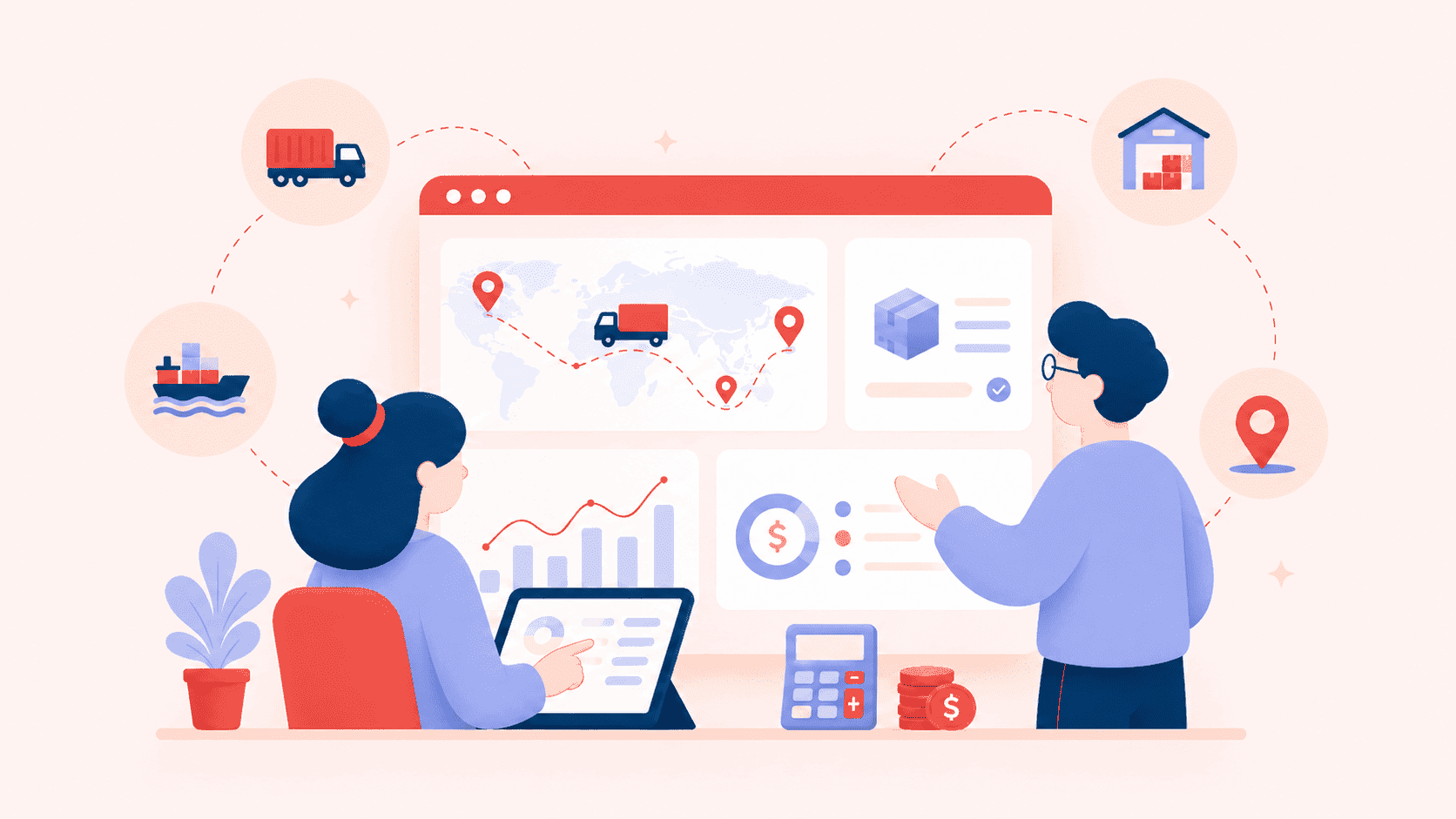
For example, a manufacturing company can use supply chain software to track raw materials, monitor supplier performance, manage warehouse inventory, and schedule deliveries from a single dashboard. This improves efficiency while reducing delays and unnecessary costs.
Features of Supply Chain Management Software
Explore the supply chain software features.
Inventory Management
Inventory management helps businesses monitor stock levels and keep inventory balanced based on business needs. It improves inventory accuracy and helps maintain balanced stock levels.
Real-time inventory tracking: Monitor inventory across warehouses with up-to-date stock information.
Automatic stock level updates: Update inventory automatically after every sale, purchase, or return.
Low-stock and reorder alerts: Send alerts when stock goes below the set minimum level.
Inventory reports and analytics: Generate reports to understand inventory movement and stock performance.
Order Management
Order management streamlines the complete order process, from order placement to delivery. It helps businesses process customer orders faster and more accurately.
Centralized order processing: Manage all customer orders from one centralized dashboard.
Order status tracking: Track each order from confirmation to delivery.
Automated order fulfilment: Reduce manual work by automating order processing tasks.
Returns and cancellation management: Simplify product returns, exchanges, and cancellations.
Warehouse Management
Warehouse management improves warehouse operations by organizing inventory and optimizing storage space. It helps increase productivity and reduce handling errors.
Inventory storage management: Organize products for efficient storage and retrieval.
Picking and packing optimization: Speed up order preparation with optimized workflows.
Barcode and RFID support: Improve inventory accuracy using barcode and RFID technology.
Warehouse performance monitoring: Track warehouse activities and identify operational improvements.
Transportation & Logistics Management
Transportation and Logistics Management Software helps businesses plan, manage, and monitor product deliveries. It improves delivery efficiency while reducing transportation costs.
Shipment planning and scheduling: Organize shipments for timely deliveries.
Route optimization: Select the most efficient delivery routes.
Carrier management: Manage transportation partners from one platform.
Real-time delivery tracking: Track shipment status from dispatch until it reaches the destination.
Demand Forecasting and Planning
Demand Forecasting and Planning helps businesses predict future customer demand using historical and current business data. This supports better inventory and production planning.
Sales trend analysis: Analyze past sales to identify demand patterns.
Demand prediction: Forecast future product demand more accurately.
Inventory planning: Maintain optimal inventory based on expected demand.
Production planning support: Align production schedules with market requirements.
Supplier Relationship Management (SRM)
Supplier Relationship Management helps businesses manage supplier information and improve communication. It strengthens supplier relationships and supports better purchasing decisions.
Supplier database management: Maintain complete supplier records in one place.
Supplier performance tracking: Evaluate suppliers based on quality, delivery, and reliability.
Communication and collaboration: Improve coordination with suppliers through a centralized platform.
Contract management: Store and manage supplier agreements efficiently.
Procurement Management
Procurement Management makes purchasing easier by organizing vendor selection, purchase requests, and approval workflows. It helps businesses control procurement costs and improve purchasing efficiency.
Purchase order management: Create, track, and manage purchase orders.
Vendor selection: Compare and select suitable suppliers based on business needs.
Approval workflows: Automate approval processes for faster purchasing decisions.
Procurement cost tracking: Monitor purchasing expenses and identify cost-saving opportunities.
Real-Time Tracking and Visibility
Real-time Tracking and Visibility give businesses a clear view of supply chain activities as they happen. It helps teams make faster decisions using accurate and up-to-date information.
Live shipment tracking: Monitor shipments throughout the delivery journey.
Inventory visibility: Access current stock information from every warehouse and storage facility.
Warehouse monitoring: Track warehouse activities in real time.
Delivery status updates: Receive instant updates on delivery progress.
Analytics and Reporting Dashboards
Analytics and Reporting Dashboards help businesses measure supply chain performance through visual reports and insights. They support better planning and decision-making.
Business performance dashboards: View important business metrics from a single dashboard.
Inventory reports: Analyze inventory performance and stock movement.
Order and shipment analytics: Monitor order fulfilment and delivery performance.
Custom report generation: Create reports based on specific business requirements.
AI and Automation Capabilities
AI and Automation help businesses simplify supply chain operations by automating routine tasks and delivering useful insights. These capabilities help businesses respond quickly and make better business decisions.
Demand forecasting with AI: Predict customer demand using AI-powered insights.
Inventory optimization: Recommend optimal inventory levels based on business data.
Smart business insights: Use business data to recognize patterns and improve operational planning.
ERP, CRM, and Third-Party Integrations
Integration capabilities allow Supply Chain Management Software to connect with existing business systems. This ensures smooth data sharing across different departments and applications.
ERP system integration: Connect with ERP systems to simplify daily business processes.
CRM connectivity: Sync customer information for better order and service management with CRM.
Accounting software integration: Share financial data with accounting applications.
API support for third-party tools: Integrate with external platforms and business software.
Mobile Accessibility allows users to access supply chain information anytime and from anywhere. It improves productivity by keeping teams connected even while working remotely.
Mobile app support: Access supply chain operations from mobile devices anytime.
Real-time notifications: Receive instant notifications about key business events.
Access from any location: Monitor operations while working on the move.
Secure remote monitoring: Protect business data with secure mobile access.
Factors Affecting Supply Chain Software Development Cost
The budget depends on the project's complexity, required features, integrations, technologies, and security needs. Below are the key factors that impact development cost.
Project Complexity
Projects with higher scope and complexity increase the overall cost.
Custom workflows, multiple user roles, and advanced business logic take more time to implement.
Multi-location operations and enterprise-level requirements further increase development effort.
Feature Requirements
Advanced capabilities such as AI-powered forecasting, Internet of Things (IoT)-enabled asset tracking, live shipment monitoring, and detailed business reporting require additional development effort.
Custom dashboards and role-based functionalities also add to the project budget.
Third-Party Integrations
Integrating the software with ERP, CRM, accounting systems, payment gateways, or shipping providers increases development complexity.
Each integration requires API configuration, testing, and ongoing maintenance.
More integrations generally lead to higher development costs.
Technology Stack
The choice of frontend, backend, database, cloud platform, and development frameworks impacts the overall cost.
Modern technologies need experienced developers, increasing development expenses.
Building web and mobile applications together also adds to the project cost.
Development Team Location
Development costs vary based on the location of the software development company.
Teams in different countries have different hourly rates and pricing models.
The team's experience, expertise, and project size also influence the total budget.
Security & Compliance Requirements
Strong security measures are essential to protect sensitive business and customer data.
Security features like extra login verification and user permission control need more development effort.
Compliance with industry regulations and regular security testing can further increase development costs.
Supply Chain Software Development Cost Breakdown
The cost of developing a Supply Chain Management Software solution depends on the project's size, features, and business requirements. Businesses can choose between an MVP, a mid-level solution, or an enterprise-grade platform based on their budget and long-term goals.
Software Type
Estimated Cost (USD)
Development Timeline
Best For
MVP (Minimum Viable Product)
$10,000 to $30,000
3 to 5 Months
Startups and small businesses validating a product idea
Mid-Level Solution
$30,000 to $60,000
5 to 8 Months
Businesses looking to expand with more advanced capabilities and system connectivity
Enterprise Solution
$60,000 to $100,000+
8 to 15 Months
Companies with expanding operations that need an enterprise-grade supply chain platform
MVP (Minimum Viable Product)
Supply chain software cost for MVP development covers inventory management, order management, basic reporting, and user management. This option is ideal for startups and businesses that want to validate their product idea before investing in advanced features.
Mid-Level Solution
A mid-level solution offers more advanced functionality, including warehouse management, supplier management, real-time tracking, analytics dashboards, and third-party integrations. It is well-suited for growing businesses looking to automate operations and improve supply chain efficiency.
Enterprise Solution
An enterprise supply chain software solution is a fully customized platform designed for large organizations with complex supply chain networks. It includes AI-powered automation, advanced analytics, ERP and CRM integrations, multi-location management, strong security features, and a flexible system that can grow as business needs change.
Technologies Used in Modern Supply Chain Software
Modern Supply Chain Management Software uses advanced technologies like Artificial Intelligence to simplify business processes, reduce manual work, and give businesses a clearer view of their operations. Below are some of the key technologies used in modern supply chain solutions.
If you're planning to build a custom supply chain software development solution, Tart Labs, the leading supply chain software development service, can help turn your idea into a scalable and reliable platform tailored to your business needs. Contact our team to share your requirements and develop a solution for your supply chain operations.